Showing posts with label Synth-Pop. Show all posts

Saturday, 21 January 2017

STEREO TOTAL "DACTYLO ROCK (SEKRETÄRINNEN-ROCK)" (1996)

Wenn ich dich sehe KOMMA
Denke ich DOPPELPUNKT
Der Junge macht mir Kummer
Ich möchte PUNKT PUNKT PUNKT
Dass er mir sagt GÄNSEFÜSSCHEN
Bitte komm mit zu mir
Ja, wann denn FRAGEZEICHEN
Heute um PUNKT vier

Oh oh AUSRUFEZEICHEN, es wäre so schön
Ausruf AUSRUFEZEICHEN KLAMMER AUF, KLAMMER ZU
Oh oh AUSRUFEZEICHEN, es wäre so schön
Ich in deinen Armen, GÄNSEFÜSSCHEN und PUNKT

Heute um PUNKT vier
SEMIKOLON seh ich dich
Du wirst mich abholen
Dann machen wir BINDESTRICH
Du sagst zu mir GÄNSEFÜSSCHEN
Bitte komm mit zu mir
Wozu denn FRAGEZEICHEN
Es liegt allein an dir

Oh oh AUSRUFEZEICHEN, es wäre so schön
Ausruf AUSRUFEZEICHEN KLAMMER AUF, KLAMMER ZU
Oh oh AUSRUFEZEICHEN, es wäre so schön
Ich in deinen Armen, GÄNSEFÜSSCHEN und PUNKT


[From the lyrics of "Dactylo-Rock"]


"Dactylo Rock (Sekretärinnen-Rock)" 12" single, front

During winter 1992-93, Françoise Cactus and Brezel Göring were living in the same neighborhood in Berlin and the legend has it that they casually met while shopping in a bakery in Adalbertstraße.

Françoise was about to close her experience with the French girl-garage-punk-R’n'R-Band Lolitas (...they released six albums in Germany and France and toured all over Europe and America, for more information about them have a look here...) and Brezel was keeping himself busy with an Experimental-noise-copyright-ignoring-tapeloop-soundeffects project called Sigmund Freud Experience (...he released three vinyl records under this guise, 100 copies each...).

In 1993 they started playing together. Their first recording was a ten minute cooking-recipe, in which all ingredients had sexual connotations. The recording is sadly lost... In 1994 they started rehearsaling and recording in Hamburg at the Alien Sound Studio of Peter Stein, and began to perform concerts in small venues in Berlin and Germany.

In those early days, the band logo consisted of two tits that were originally painted on a mix-tape Françoise made for Brezel entitled "Stereo Total", and I easily guess this is how the band's name was born... The logo was later shown on the backside of their first album "Oh Ah"; here you can have a look at the inlay-card of the CD version.

At this time the line-up included Françoise (vocals and drums), Brezel (vocals, guitar, organ and synthesizers) and Lesley Campell from Scotland (distorted guitar). With their unusual mix of music influences and languages, it wasn't easy then to find a label... The band used to play French Chanson, Disco, Rockabilly and Garage in a very minimal, simplified, essential way, often with self-built guitars and cheap electronics; lyrics were both written in French and German.


"Dactylo Rock (Sekretärinnen-Rock)" 12" single, back

At last, in 1995 Desert Records released their first 7" EP entitled "Allo... J'ecoute...", available here on Stereo Candies. This single is strongly linked to Lolitas, in fact the track "Je suis venu te dire que je m'en vais" was recorded in New Orleans by Alex Chilton - who had produced the group's "Fusée d'amour" back in 1989 - and "Avec ma valise" was originally included on "Séries Américaines" in 1987.

During the same year, Palestinian bassist Ghazi Barakat, a.k.a. Iznogood - ex member of the Hardcore / Experimental combo Burst Appendix - joined in and for some time the band became a quartet.

In January 1996, Stereo Total finally released their first album entitled "Oh Ah", which included tracks recorded during 1994 and 1995 at the aforementioned Alien Sound Studio in Hamburg, and a lot of 4-track home recordings.

The CD version of the album was published in Germany by Peace 95, while the vinyl edition came in the form of a 2.000 copies limited edition LP on Little Teddy Recordings; these were divided into four different colours, with respectively 500 copies in black, translucent red, translucent blue and clear translucent.

The album spawned two singles which, once again, were divided equally betweeen the labels: Peace 95 took care about the release of the "Miau Miau" 7" EP, available here on Stereo Candies, while Little Teddy Recordings released "Dactylo Rock" in the form of a CD single.

At the same time, a 500 copies white label 12" blue vinyl of "Dactylo Rock" marked the beginning of Stereo Total's tenure at Bungalow and, as you already guessed, today is the subject of this post.


A picture taken during the same session the produced the "Dactylo Rock" CD-single cover, 1996


Here's the track list for this release:

01. Dactylo Rock (Sekretärinnen-Rock) (2:34)
02. Dactylo Rock (MS 20 Dactylo by Chrislo Haas) (2:22)
03. Dactylo Rock (Tijuana Dactylo by Sons of '68) (1:48)
04. Dactylo Rock (Atatak-Mix by A Certain Frank) (2:36)
05. Dactylo Rock (Dactylo Pop by Pop Tarts) (2:07)
06. Dactylo Rock (Hyper Modern Jazz Mix by Alec Empire) (4:10)
07. Dactylo Rock (Sekretärinnen Inferno by Le Hammond Inferno) (4:44)
08. Dactylo Rock (Bossa Dactylo by Sons of '68) (2:20)

All tracks were remastered from the original CD single and 12" vinyl release in January 2017, and are available in FLAC lossless format, along with scans of the complete original artworks.

As usual, please have a look at the comments for the download link.


"Dactylo Rock (Sekretärinnen-Rock)" CD single, front

The "Dactylo Rock (Sekretärinnen-Rock)" 12" single was one of the earliest records released by Bungalow, the great Pop and Electronica German label founded in the mid '90s by Marcus Liesenfeld and Holger Beier a.k.a. Le Hammond Inferno. Compared to the original CD single issued by Little Teddy Recordings, this release offers an improved track list, with a total of eight tracks instead of seven.

The record is limited to 500 hand-numbered copies. The number of each copy is usually written on one of the white center-labels, but the copy in my possession is not numbered, so I speculate that a few more than 500 copies exist, or maybe not all of them were numbered... The colour of the vinyl itself, the transparent stickered sleeve and the limited pressing make it a nice collectable item anyway.

Side A opens with the original version of "Dactylo Rock (Sekretärinnen-Rock)", a track that has become a favourite during live concerts and perfectly expresses Stereo Total's ability to create simple but very effective little songs. The German lyrics written by Françoise Cactus offer many puns based on the names of punctuation marks as used in written and printed text, and the basic rhythm track is aptly performed on a... typewriter!

Chrislo Haas, best known as founder of the seminal act Liaisons Dangereuses and early member of Der Plan and Deutsch Amerikanische Freundschaft, delivers a minimal remix which, according to its title, features electronic sounds created with the glorious Korg MS-20 synthesizer. On the CD single this remix is entitled "Chrislos Sekretärin", but the version is just the same.

A "Tijuana Dactylo" version performed by the mysterious Sons of '68 follows. As per its title, the song is played in a Lo-Fi Mariachi style with a faster tempo and French lyrics. In my opinion Sons of '68 is just an alias for Stereo Total themselves... Of course I may be wrong, but this version sounds like a garage rehearsal with guest trumpeteers, and the voice belongs to Françoise Cactus beyond the shadow of a doubt...

First side ends with the "Atatak-Mix" created by A Certain Frank, who are no less than the founders of the German Ata Tak label. Their version is close to the original, but adds interesting tape-machine noises, samples and dance floor-friendly elements.


"Dactylo Rock (Sekretärinnen-Rock)" CD single, back

As first track on Side B we find "Dactylo Pop" by Pop Tarts, a now disbanded young Pop/Punk German band that we'll hopefully be able to feature on this blog in the future. Just like much of their early output, their contribution was recorded live in a Lower than Lo Lo-Fi mode, with rough samples layered on top... You can't help but have a fondness for them!

An "Hyper Modern Jazz Mix" by Alec Empire follows. This version is entitled "Ausrufezeichen" on the CD single track list, but it is the same mix... I must admit that I'm not a big fan of Empire, although I enjoyed some of his earliest work, "Generation Star Wars" above all. I find the 13/27 rhythm track (...or whichever its time signature is...) mostly irritating, and in my opinion the only tiny vocal element sampled from the original is not enough to call this a remix: it is a completely different track and, although variety is usually a positive element when you collect several remixes in a single release, it doesn't fit quite well with the rest of the material, sorry.

Le Hammond Inferno, a.k.a. the Bungalow Records bosses deliver their "Sekretärinnen Inferno" remix, which is a cavalcade through different music styles that also offer a sample of their, ehm... sampling techniques and subtle sense of humour. Well done!

The single ends with another version created by the Sons of '68, entitled "Bossa Dactylo". As the title implies, the song is played in a vague Bossa nova style. Once again this seems to be a live recording and the lyrics are sung in French. Strangely enough this version was not included on the CD single, but was later added as a bonus track on the "Oh Ah" CD released by Bungalow in 1998, along with the aforementioned "Dactylo Pop" version created by Pop Tarts.

Here's the short credits list that appears on the CD single:

Mastering: C-Sa

Cover by Sabina Maria Van Der Linden.

Photo by Thomas Purwin.

Berlin '96


"Dactylo Rock (Sekretärinnen-Rock)" CD single, disc

The following clips offers a preview of the remastered single, enjoy four "Dactylo Rock" remixes by Chrislo Haas, A Certain Frank, Le Hammond Inferno and Sons of '68!


As a bonus, here's the original videoclip for "Dactylo Rock"...


...and a 2013 live performance of the same song filmed in Leipzig, enjoy!


More information about Bungalow and Stereo Total is available here:

http://web.archive.org/web/20130911023255/http://www.bungalow.de/index3.html

http://www.discogs.com/label/1125-Bungalow

http://rateyourmusic.com/label/bungalow_records/

http://stereototal.de

http://stereototal.stereototal.de

http://monokini.free.fr/index.html

http://www.discogs.com/artist/Stereo+Total

http://en.wikipedia.org/wiki/Stereo_Total

http://www.facebook.com/StereoTotal

http://www.myspace.com/stereototal

http://soundcloud.com/stereototal


If you have any other useful information about Stereo Total - especially corrections and improvements to this post - or if you spot any dead links, please get in touch with me at stereocandies [at] hotmail [dot] com or leave a comment in the box below, thank you!

Wednesday, 28 September 2016

GIUSTO PIO "NOTE" (1987)

«One day, coming back from school in Castelfranco when I was about eight or nine, I met a person who was playing violin under the arcades, in front of a small shop: that frail sound came over me, it made me vibrate and echoed inside of me for many days.»

[Giusto Pio, translated from the book "Dedicato a Giusto Pio"]


Giusto Pio was born in Castelfranco Veneto, Italy, in 1926. He inherited a passion for music from his father, who played several instruments without ever having attended regular schools.

At 13 he began to study violin in Marghera and three years later he was accepted at the Liceo Musicale Cesare Pollini of Padua. In 1941 he moved to Venice, where he studied composition and violin under Luigi Enrico Ferro, the last great violinist of the "Venetian School", at the Benedetto Marcelli Conservatory.

Pio graduated in violin in 1947, a few years later he got married and moved to Milan. During the '50s he received important national and international awards and entered the RAI orchestra of Milan (Italian television orchestra) as Concertino violin, a role that enabled him to acquire, in about thirty years of activity in close contact with the best directors and performers of the world, a wide experience in the field of orchestral-symphonic and operatic music.

During the '60s and the '70s, he also carried out an intense didactic activity with the best Milanese and Italian chamber music ensembles, contemplating a vast repertoire of music that, starting from the Middle Ages and Renaissance (Letitiae Musicae, the pioneer group in Italy for Medieval and Renaissance music), went through the Italian Baroque (Complesso Strumentale Italiano, Symposium Musicum Milano, Giovane Quartetto di Milano, Complesso Barocco di Milano, etc.), and then reached the contemporary music of today with many premières of the greatest Italian living composers.

Over the years Giusto Pio has participated in several recordings for the major record companies of the time (Ricordi, Angelicum, Vox, Decca). These musical performances were always philologically attentive, thanks to the help of musicologists such as Francesco Degrada and Raffaello Monterosso of the Musical Paleography School of Cremona.

At the same time, his expertise was also in demand in the field of Popular Music, and Pio has worked as a session musician adding his instrument to the recordings of many famous Italian singers of the '50s and '60s, including Claudio Villa, Luciano Tajoli, Nilla Pizzi, Tony Dallara, Betty Curtis, Domenico Modugno, Adriano Celentano and Mina.

In the late '70s Pio was hired by Franco Battiato as violin teacher and they soon became friends. Later on, almost for amusement and curiosity, Pio began to play improvised concerts with him and vocalist Juri Camisasca.

In 1978 he worked as musician on "Juke Box" by Battiato and during the same year he released his first album of experimental music entitled "Motore immobile" (...you can listen to the whole album here...) on Cramps Records.

The long collaboration with Battiato was one of the most prolific and interesting during the '80s and '90s in Italy; this partnership took Pio to new heights in the fields of commercial and avantgarde music, with a great success in terms of popularity and discography.


Most of the albums by Franco Battiato, from "L'era del cinghiale bianco" (1979) to "Unprotected" (1994), depending on the case, included Giusto Pio as co-author of the music or of the arrangements, as violinist or as conductor. All the tours performed by Battiato during those years always included Giusto Pio among the essential lineup of musicians.

In those years, always with Battiato, he wrote the music and arrangements of many hit songs for Italian singers Alice, Giuni Russo and Sibilla ("Per Elisa" by Alice won the Sanremo Festival in 1981, you can watch the original performance here), produced two albums for Milva and various songs for other artists.

In 1984 Pio, Battiato and lyricist Rosario 'Saro' Cosentino penned the Eurovision Song Contest entry "I treni di Tozeur", performed by Alice and Battiato, which finished 5th in the contest and became a considerable commercial success in Continental Europe and Scandinavia. A video of the original performance, which briefly shows Giusto Pio as orchestra conductor, is available here.

Between 1982 and 1987 he released three lovely albums of Pop music: "Legione straniera", "Restoration" - I already remastered both of them some time ago along with the "Auto-Motion (Otomoscion)" single - and "Note", the subject of this post. In particular, "Legione straniera" and "Restoration", both written along with Battiato, sold very well and Pio became a well-known name among the younger audiences, as evidenced by the musical chronicles of those years on many magazines and newspapers.

In 1988 he published "Alla corte di Nefertiti", an album that marked the passage to a music style which was very different from his previous output and had far less commercial appeal. His association with Pop music definively waned after the end of his artistic fellowship with Battiato.

Over the past decade, Pio increasingly approached acoustic and electronic research, and produced music for theater (for example the play "Medea", for the Florentine group Krypton, which won first prize for music at the Massa Carrara Festival, or his collaboration on Battiato's operas performed in the major Italian theaters), music for movies and interactive musical comments with other art forms such as painting, sculpture and poetry.

Among his most recent music releases we remember "Utopie" (1990), "Missa Populi" (dedicated to His Holiness John Paul II, 1995), and "Le vie dell'oro" (2000).

The book "Dedicato a Giusto Pio", which includes a companion CD entitled "Dolomiti Suite", was published in 2010 to celebrate Pio's 85th birthday.

Giusto Pio has turned 90 on 11 January 2016.


"Note" contains the following tracks:

01. Capriccio (3:38)
02. Halley (4:20)
03. Concerto (4:01)
04. Capitano Nemo (4:18)
05. Ninna nanna per Andrea (3:22)
06. Inno (3:06)
07. Angeli? (3:32)
08. Sagra (3:11)
09. Ultimo Lied (3:18)

Although the artwork was scanned and restored from the vinyl album in my possession, the music was sourced and remastered from an original copy of the rare CD version which was kindly supplied by Stefano AbulQasim, thank you so much Stefano!

All tracks were remastered in September 2016 and are available in FLAC lossless format, along with complete artwork reconstruction and printable PDF files.

Please have a look at the comments for the download link.


«After the moderate success of "Legione straniera" and "Restoration" I had decided to be the Cincinnatus of the day, cultivating a small piece of land in my neck of the woods. However, the lure of music was too strong. After all, I still used to perform each now and then with some 'ensemble' of acoustic music, be it Baroque or other styles, so I hadn't completely quit the stage. Then, some old friends (starting from producer Angelo Carrara and the CBS press office) convinced me to work on a new record. The album, informal in style and presentation, was born almost like a 'divertissement'. I bought a mixer and a twelve-track tape recorder, and I brought them to my country house. There, from February onwards, I focused on the compositions. I also resumed old ideas that I had never developed; some of them date back to the days when I used to work with Battiato.» [1]

«"Note" is my latest album of Pop music; it includes instrumental compositions for violin and strings. Two tracks, namely "Halley" and "Capitano Nemo", were retrieved from some improvisations related to "Cigarettes", an unreleased work made in 1978-79. Other compositions are more recent, for example the lullaby that I composed for my nephew Andrea.» [2]

"Note" (Notes) was released by CBS with catalogue number 460063.1 sometimes in late 1987, probably in October or early November, both on LP and cassette tape. The album was also issued on CD format in a limited run, hence its rareness today.

Just like the two previous Pio's Instrumental Pop efforts, the album was produced by Angelo Carrara. However, the album doesn't feature the same team of musicians that enriched those records; guitar and bass are completely absent in favour of a more electronic / programmed / midi sound that unfortunately, in certain passages, appears a little bit dated today.

Franco Battiato, who had co-written all the tracks on "Legione straniera" and "Restoration" - the touchstones with whom "Note" should be compared - was not involved in the making of this album and his contribution is limited to the short endorsement that those of you who are lucky enough to read Italian can enjoy here below.

All tracks are therefore signed by Pio alone and, as a matter of fact, the usual extra-European suggestions which are ascribable to Battiato are not part of this work. Unlike in the two previous albums, quotes from famous pieces of Classical Music are nowhere to be found on "Note".

I may be wrong, but I guess that on this album Pio received some help by young pianist Roberto Rossi: he is credited for playing various sinthesizers and samplers, but also for some kind of 'artistic collaboration'. In the meantime, after years spent playing keyboards for many Italian artists, Rossi is now Head of the A&R department of Sony Music Italy...


An endorsement about "Note" written by Franco Battiato


The album opens with "Capriccio", an uptempo number which probably would have been the perfect choice for a single or for radio promotion, but as far as I know no single was released, not even a promo.

"Halley" is a superb composition, probably the best on the record, and deserves a special mention; it brings up images of deep space and oceans. How this piece can be born from an improvisation completely eludes me...

The piano + midi keyboards introduction of "Concerto" doesn't sit among my favourite moments of this record; luckily enough the track evolves with a sax + violin refrain that elevate the mood. I can't help to think about how this piece would have benefited from a real bass instead of the thin sequenced line that we are offered.

Side One ends with "Capitano Nemo" (Captain Nemo), another of those tracks whose origin Pio traces back to the late 70s. Once again, this is a strong piece that offers a well-balanced fusion of sequenced elements and violin, with an apt organ outburst in the closing section.

Side Two starts with the sweet "Ninna nanna per Andrea" (Lullaby for Andrea). In his short review of the album, Battiato describes it as «a kind of symphonic poem chamber, a "program music" intimate story».

"Inno" (Hymn) may not be as effective as Vangelis' "Hymne" but its progressions highlight the more playful side of the Maestro, while "Angeli?" (Angels?) offers a serene reflection on faith, a theme which is very close to his heart.

With "Sagra" (Festival / Celebration) the album returns to a lively mixture of synthesizers, with different melodies chasing each other until the violin bursts onto the scene.

"Note" closes with "Ultimo Lied" (The Last Lied), a romantic «twilight poem», where violin and piano have prominent roles.


Sources:

[1] translated from this interview;

[2] translated from the book "Dedicato a Giusto Pio".


Here's the complete credits and personnel list as translated from the back cover of "Note":

Music by Giusto Pio.
Artistic collaboration by Roberto Rossi.
Produced by Angelo Carrara.

Violin and strings: Giusto Pio
Synthesizers and samplers (Fairlight, Yamaha, Akai, Oberheim): Roberto Rossi
Piano on "Concerto": Roberto Rossi
Drums: Alfredo Golino
Drum machines and programming (Yamaha, D.Drum): Alfredo Golino
Sax: Amedeo Bianchi

Recorded at "Cetra Art Recording Studio" by Ezio De Rosa.
Mixed at "Psycho Studio" by Marti Robertson.

Photography by Giorgio Ciprandi.
Still life by Mario Tedeschi.
Cover by Studio Vertigo.


Giusto Pio as he appears on the back cover of "Note"


The following clips offer a preview of the remastered album, please enjoy "Capriccio", "Halley", "Capitano Nemo", "Inno" and "Ultimo Lied"!


More information about Giusto Pio and "Note" is available here:

http://digilander.libero.it/giustopio

http://it.wikipedia.org/wiki/Giusto_Pio

http://digilander.libero.it/gianni61dgl/giustopio.htm

http://www.stefanomeneghetti.it/2010/04/giusto-pio/

http://www.frontiereprogetti.com/index.php?startpage=eventi&id=127

http://www.discogs.com/artist/369428-Giusto-Pio

https://www.debaser.it/giusto-pio

http://digilander.libero.it/giustopio/intervista.htm

http://dentroisecondi.blogspot.it/2013/07/giusto-pio-se-ne-consiglia-la-lettura.html

http://www.musicletter.it/?x=entry:entry111208-130248

http://aliceedintorni.blogspot.com/2010/12/dedicato-giusto-pio-11-gennaio-2011.html

http://www.arte.go.it/2015/01/18/video-latelier-di-giusto-pio-1/


If you have any other useful information about this post or if you spot any dead links, please get in touch with me at stereocandies [at] hotmail [dot] com or leave a comment in the box below, thank you!

Friday, 5 August 2016

BUNGALOW RECORDS, THE POOL SERIES #2: STEREO TOTAL "SCHÖN VON HINTEN" (1997)

Du bist schön von Hinten
mit ein paar Metern Entfernung
Schön bist du im Nebel, wenn du gehen musst
Bitte, bleibe nicht bei mir
Zeig mir deinen Rücken
Am Schönsten bist du, wenn du gehen musst

Wie soll ich, wie soll ich, wie soll ich,wie soll ich, mich nach dir sehnen
wenn du stets, wenn du stets, wenn du stets, wenn du stets bei mir bist?
Wie soll ich, wie soll ich, wie soll ich, wie soll ich mich nach dir sehnen?
Jeden Tag, jede Nacht, jeden Tag, jede Nacht bist du bei mir

Löse dich in Luft auf
Hiterlass keine Spuren
Zeig, wie du aussiehst, wenn du nicht mehr bist
Ich bedanke mich herzlich
Ich hatte viel Spaß mit dir
Aber ohne dich war es auch nicht schlecht
Vielleicht besser sogar

Wie soll ich, wie soll ich, wie soll ich,wie soll ich, mich nach dir sehnen
wenn du stets, wenn du stets, wenn du stets, wenn du stets bei mir bist?
Wie soll ich, wie soll ich, wie soll ich, wie soll ich mich nach dir sehnen?
Jeden Tag, jede Nacht, jeden Tag, jede Nacht bist du bei mir

Schick mir ein Foto von dir
Oder eine Postkarte
Geh, es ist vorbei
Goodbye


[from the lyrics of "Schön von Hinten"]


Bungalow Records was a Pop / Electronica label founded in 1996 by Berliner DJs Holger Beier and Marcus Liesenfeld, a.k.a. Le Hammond Inferno:

«We have always been passionate about music, towards the end of the '80s we started playing in an indie band and DJing at the same time, combining our strong passions for Pop and Dance music. That was a very fertile period for the Club scene in Germany and we were very busy organizing a series of parties that have entered into the history of German clublife. Parties attended by Saint Etienne, Towa Tei of Deee-Lite, Stereolab... At that point we ended up being a reference point and many people were interested in the creation of a label. We actually had never thought about it, but our encounter with Christof Ellinghaus of City Slang has made this possibility a reality. We founded Bungalow and slowly we tried to learn how to manage a record label.»

[from an interview published on Blow Up magazine, issue #26/27, July 2000]


For a few years, until the early '00s, Bungalow was a very prolific and cool label. Their compilations "Sushi 3003" / "Sushi 4004" marked the first time a western indie label delved into the cutting edge Japanese Club-Pop scene:

«...the initial spark was the moment we listened to "Twiggy Twiggy" by Pizzicato Five and later Towa Tei's "Future Listening". We were hearing a new, never heard craziness in playing around with Pop music. The first thing that came to our simple minds was: there must be more. So we contacted journalist and Nippon-Mania-Man Olaf Maikopf and had the quite naive idea to travel to Japan and put together a compilation of modern Japanese Club-Pop. After running through the streets of Tokyo for some 10 days, meeting about 35 record companies and even more bands, we were totally confused and had to carry tons of CDs and LPs back home (much to the pleasure of the Lufthansa customs agents). Back home we slept for a month and then compiled "Sushi 3003" as an introduction to Japanese Club-Pop and concentrated on giving a wide overview of what has been going on in Tokyo in the last 10 years.»

[from the "Sushi 4004" liner notes, 1998]


Bungalow gave us the chance to (re)discover the soundtrack works of German composer Peter Thomas; they also licensed most of Combustible Edison releases in Europe and brought Stereo Total to international success and fame, album after album.

Among others, they released lovely CDs by Czerkinsky, Fantastic Plastic Machine, Yoshinori Sunahara and Bertrand Burgalat, and other little wonders from the German underground like Pop Tarts, Dauerfisch, Mina... For this and all the rest, thank you Bungalow!

The "Pool Series" was a... series of 12" records that explored the more Dance-oriented side of the label. They were released in a simple brown cardboard sleeve with a sticker containing all the pertinent details.

The cover design was changed at a later stage, and the last five issues offered a different design, with all information printed directly on the sleeves and no sticker at all.


The second issue in the series was Stereo Total's "Schön von Hinten", released in 1997. The single was also published on CD - with a different track order - in the regular Bungalow catalogue.

Althought the remastered tracks presented here use the CD single as source, they are sequenced according to the track list of the original 12" vinyl release:

01. Schön von Hinten (Rimini Mix by Brezel Göring) (2:37)
02. Schön von Unten (Andreas Dorau, Michel und DJ It) (4:37)
03. The Other Side of You (Momus & Laila France) (4:23)
04. Schön von Hinten (Halb-Remix by Hermann Halb) (3:14)
05. Schön von Hinten (Sons of '68 & Jan Bontempi) (2:36)
06. Schön von Hinten (Original) (2:49)

All tracks were remastered in August 2016 and are available in FLAC lossless format, along with scans of the complete original artwork.

As usual, please have a look at the comments for the download link.


"Schön von Hinten" seems to be a sort of farewell song and at the same time looks like a praise to a man's butt... Uhm, which of the two... Maybe both?

Side A opens with the "Rimini Mix" by Brezel Göring. Curiously enough, at the beginning of the song you can listen to Françoise Cactus speaking Italian announcing that «This song is by Stereo Total and is entitled "You're Beautiful From Behind"»... This remix turns the original into a cheap dance anthem and I can easily imagine it being spinned in some clubs during the most drunken hours somewhere on the Adriatic Riviera...

In their "Schön von Unten", Andreas Dorau (...of Die Doraus Und Die Marinas fame...) along with the mysterious DJ It and a certain Michel, opt for an 8bit treatment and I must admit that I don't like it that much, no.

Side B opens with the beautiful reinterpretation by veteran Momus & Laila France. The original is given new lyrics, both in English and French, and is a small educated masterpiece. A lesson to learn for everyone dealing with a remix duty.

Hermann Halb's "Halb-Remix" uses a few effects to create a feeling of estrangement, but musically I wouldn't say that it's quite interesting as it doesn't add much to the original.

In my opinion Sons of '68 & Jan Bontempi is an alias for Stereo Total themselves... Of course I may be wrong, but their version sounds like a garage rehearsal and the voice belongs to Françoise Cactus beyond the shadow of a doubt...

The record ends with the original song as heard on the album "Monokini". With the exception of the aforementioned Momus & Laila France cover, and despite the various remix treatments, I believe that this is still the best version and one of the trademark songs of the early Stereo Total. Now, if only I could figure out where that percussion loop was sampled from...

A short Stereo Total biography 1993-1997 is available here below. The following clips offer a preview of the remastered 12"/CD single; the promotional videoclip of the original version of "Schön von Hinten" is also included as a bonus, enjoy!


During winter 1992-93, Françoise Cactus and Brezel Göring were living in the same neighborhood in Berlin and the legend has it that they casually met while shopping in a bakery in Adalbertstraße.

Françoise was about to close her experience with the French girl-garage-punk-R’n'R-Band Lolitas (...they released six albums in Germany and France and toured all over Europe and America, for more information about them have a look here...) and Brezel was keeping himself busy with an Experimental-noise-copyright-ignoring-tapeloop-soundeffects project called Sigmund Freud Experience (...he released three vinyl records under this guise, 100 copies each...).

In 1993 they started playing together. Their first recording was a ten minute cooking-recipe, in which all ingredients had sexual connotations. The recording is sadly lost... In 1994 they started rehearsaling and recording in Hamburg at the Alien Sound Studio of Peter Stein, and began to perform concerts in small venues in Berlin and Germany.

In those early days, the band logo consisted of two tits that were originally painted on a mix-tape Françoise made for Brezel entitled "Stereo Total", and I easily guess this is how the band's name was born... The logo was later shown on the backside of their first album "Oh Ah"; here you can have a look at the inlay-card of the CD version.

At that time the line-up included Françoise (vocals and drums), Brezel (vocals, guitar, organ and synthesizers) and Lesley Campell from Scotland (distorted guitar). With their unusual mix of music influences and languages, it wasn't easy then to find a record label... The band used to play French Chanson, Disco, Rockabilly and Garage in a very minimal, simplified, essential way, often with self-built guitars and cheap electronics; lyrics were both written in French and German.

At last, in 1995 Desert Records released their first 7" EP entitled "Allo... J'ecoute...", available here on Stereo Candies. This single is strongly linked to Lolitas, in fact the track "Je suis venu te dire que je m'en vais" was recorded in New Orleans by Alex Chilton - who had produced the group's "Fusée d'amour" back in 1989 - and "Avec ma valise" was originally included on "Séries Américaines" in 1987.

During the same year, Palestinian bassist Ghazi Barakat, a.k.a. Iznogood - ex member of the Hardcore / Experimental combo Burst Appendix - joined in and for some time the band became a quartet.

      
Schön von Hinten" was also released as a CD single with a different track order...

In January 1996, Stereo Total finally released their first album entitled "Oh Ah", which included tracks recorded during 1994 and 1995 at the aforementioned Alien Sound Studio in Hamburg, and a lot of 4-track home recordings.

The CD version of the album was published in Germany by Peace 95, while the vinyl edition came in the form of a 2.000 copies limited edition LP on Little Teddy Recordings; these were divided into four different colours, with respectively 500 copies in black, translucent red, translucent blue and clear translucent.

The album spawned two singles which, once again, were divided equally betweeen the labels: Little Teddy Recordings released "Dactylo Rock" in the form of a CD single that included remixes by - among others - Chrislo HaasA Certain FrankAlec Empire and Le Hammond Inferno, while Peace 95 took care about the release of the "Miau Miau" 7" EP, which also included a few unreleased numbers and is available here.

At the same time, a 500 copies white label 12" blue vinyl of "Dactylo Rock" marked the beginning of Stereo Total's tenure at Bungalow. Compared to the original CD single, the 12" offered an improved track list. Its printed transparent sleeve and the limited pressing make it a collector's item.

Before the end of the year, after a tour through Germany, Austria, and Switzerland the band split and Stereo Total became a duo again... In 1997 Angie Reed started collaborating with Françoise and Brezel, and her name became officially associated with the group when their second full-lenght work, entitled "Monokini", was released.

"Schön von Hinten", one of the most memorable tracks on the album, was issued as a single - both as a 12" vinyl and CD - and is the subject of this post.


Stereo Total 1997: Françoise Cactus, Brezel Göring and Angie Reed


More information about Bungalow Records and Stereo Total is available here:

http://web.archive.org/web/20130911023255/http://www.bungalow.de/index3.html

http://www.discogs.com/label/1125-Bungalow

http://rateyourmusic.com/label/bungalow_records/

http://stereototal.de

http://stereototal.stereototal.de

http://monokini.free.fr/index.html

http://www.discogs.com/artist/Stereo+Total

http://en.wikipedia.org/wiki/Stereo_Total

http://www.facebook.com/StereoTotal

http://www.myspace.com/stereototal

http://soundcloud.com/stereototal


The "Pool Series" will continue in the next months. All your inputs are welcome, if you want to get in touch please write to stereocandies [at] hotmail [dot] com or leave a comment in the box below, thank you!

Tuesday, 29 March 2016

GIUSTO PIO "AUTO-MOTION (OTOMOSCION)" (1984)

Facilitati bioritmi computerizzati
han calcolato la fine di questo pianeta:
l'asse polare si spezzerà

L'umanità si sveglierà al suono delle sfere
saremo avvolti da un rumore di fondo tra le colonie di Mercurio
e della Terra non resterà che un pallido ricordo

Nei frigoriferi cellule liofilizzate
uomini-quanti algoritmici codificati
l'ora legale simbolica

Un'unità ci guiderà sulla città satellite
pattuglie a sfera fatte solo di fuoco dentro agli anelli di Saturno
e della Terra non resterà che un pallido ricordo

[from the lyrics of "Auto-Motion"]


edit 05.04.2016

Filippo Destrieri, historical musical partner of Franco Battiato and Giusto Pio, and main programmer / performer of the electronic and rhythmic parts that make up "Auto-Motion", was kind enough to let me have more information about the subject of this post. He also offered some corrections to the lyrics of the song that I had tried, but in vain, to understand. This really made my day, THANK YOU!!!


-------------------------------------------------------------------------------------------------

As promised recently in the post dedicated to "Restoration", it's time to take care about the "Auto-Motion (Otomoscion)" 7" single.

This time I'll keep it short, you can read a detailed Giusto Pio biography in the aforementioned post or in the one I dedicated to "Legione straniera" some time ago.


"Auto-Motion (Otomoscion)" contains the following tracks:

01. Auto-Motion (3:56)
02. Auto-Motion (versione strumentale) (3:25)

Both tracks were remastered from the original vinyl in March 2016 and are available in FLAC lossless format, along with scans of the complete original artwork.

Please have a look at the comments section for the download link.


The single was released by EMI Italiana with catalogue number 06 1186667 sometimes in late 1984 and comes in a cover designed by Francesco Messina. No credits are given on the sleeve, but the author's style is easily recognisable, especially the 'alternating fonts' which he used on other works during those years.

Although producer Angelo Carrara is the only name credited on the labels, I understand that the same team of musicians and technicians who worked on the albums "Legione straniera" and "Restoration" in 1982/83 is also responsible for what we can hear on this precious little piece of vinyl. In particular, all the keyboards and rhythmic parts were played and/or programmed by Filippo Destrieri.


On Side A we find "Auto-Motion", a song composed by Franco Battiato and Giusto Pio, with lyrics by Saro Cosentino and - once again - Battiato, who also takes care about singing aided by a choir: I erroneously supposed this was the Madrigalisti di Milano ensemble, but I was told that actually they are the same musicians who participated in the recordings, along with studio technicians and whoever happened to be there on such occasion... The lyrics are all about an hypothetic future where the Earth cease to exist and humanity is forced to find a new home...

Interestingly enough, the song was used as the theme to "Chip" (...erroneously quoted as "Clips" both on the cover and label...), an Italian television broadcast about information technology that aired in September / October 1984. You can watch the original clip here below courtesy of Vimeo.

Side B offers an instrumental version of the same track, with Giusto Pio's prominent violin in place of the original vocal lines sung by Battiato.


Giusto Pio in the '80s


The following clips offer a complete preview of the remastered single. The original clip of the song is also included as a bonus, enjoy!


More information about Giusto Pio, Franco Battiato, Saro Cosentino, Filippo Destrieri, "Auto-Motion (Otomoscion)" and "Chip" is available here:

http://www.giustopio.it/

http://digilander.libero.it/giustopio

http://it.wikipedia.org/wiki/Giusto_Pio

http://digilander.libero.it/gianni61dgl/giustopio.htm

http://www.stefanomeneghetti.it/2010/04/giusto-pio/

http://www.frontiereprogetti.com/index.php?startpage=eventi&id=127

http://www.discogs.com/artist/369428-Giusto-Pio

https://www.debaser.it/giusto-pio

http://digilander.libero.it/giustopio/intervista.htm

http://www.musicletter.it/?x=entry:entry111208-130248

http://dentroisecondi.blogspot.com/2013/07/giusto-pio-se-ne-consiglia-la-lettura.html

http://aliceedintorni.blogspot.com/2010/12/dedicato-giusto-pio-11-gennaio-2011.html

http://www.arte.go.it/2015/01/18/video-latelier-di-giusto-pio-1/

https://www.discogs.com/Giusto-Pio-Auto-Motion-Otomoscion-12/release/1709825

https://battiatosingolare.wordpress.com/tag/giusto-pio/

http://quattrobit.blogspot.it/2014/03/chip-1984-trasmissione-rai-dedicata.html

http://www.tv-pedia.com/zapzaptv/viewtopic.php?f=3&t=2871

http://www.tv-pedia.com/zapzaptv/viewtopic.php?f=3&t=1366&start=15

http://en.wikipedia.org/wiki/Franco_Battiato

https://it.wikipedia.org/wiki/Saro_Cosentino

https://it.wikipedia.org/wiki/Filippo_Destrieri

https://www.youtube.com/watch?v=KCwPaltMbOM

https://www.youtube.com/watch?v=XUlfOk1gnkE

https://www.youtube.com/watch?v=sN7BNsxiUx8

https://www.youtube.com/watch?v=Dnx_k6SYAUM

https://www.youtube.com/watch?v=x9PXZNhL0qY

https://www.youtube.com/watch?v=Tsyp_39RFRo


If you have any other useful information about this post or if you spot any dead links, please get in touch with me at stereocandies [at] hotmail [dot] com or leave a comment in the box below, thank you!

Thursday, 14 January 2016

GIUSTO PIO "RESTORATION - THE ANCIENT SCHOOL OF RESTORATION" (1983)


Giusto Pio was born in Castelfranco Veneto, Italy, in 1926. He inherited a passion for music from his father, who played several instruments without ever having attended regular schools.

At 13 he began to study violin in Marghera and three years later he was accepted at the Liceo Musicale Cesare Pollini of Padua. In 1941 he moved to Venice, where he studied composition and violin under Luigi Enrico Ferro, the last great violinist of the "Venetian School", at the Benedetto Marcelli Conservatory.

Pio graduated in violin in 1947, a few years later he got married and moved to Milan. During the '50s he received important national and international awards and entered the RAI orchestra of Milan (Italian television orchestra) as Concertino violin, a role that enabled him to acquire, in about thirty years of activity in close contact with the best directors and performers of the world, a wide experience in the field of orchestral-symphonic and operatic music.


During the '60s and the '70s, he also carried out an intense didactic activity with the best Milanese and Italian chamber music ensembles, contemplating a vast repertoire of music that, starting from the Middle Ages and Renaissance (Letitiae Musicae, the pioneer group in Italy for Medieval and Renaissance music), went through the Italian Baroque (Complesso Strumentale Italiano, Symposium Musicum Milano, Giovane Quartetto di Milano, Complesso Barocco di Milano, etc.), and then reached the contemporary music of today with many premières of the greatest Italian living composers.

Over the years Giusto Pio has participated in several recordings for the major record companies of the time (Ricordi, Angelicum, Vox, Decca). These musical performances were always philologically attentive, thanks to the help of musicologists such as Francesco Degrada and Raffaello Monterosso of the Musical Paleography School of Cremona.

At the same time, his expertise was also in demand in the field of Popular Music, and Pio has worked as a session musician adding his instrument to the recordings of many famous Italian singers of the '50s and '60s, including Claudio Villa, Luciano Tajoli, Nilla Pizzi, Tony Dallara, Betty Curtis, Domenico Modugno, Adriano Celentano and Mina.


Franco Battiato and Giusto Pio in the late '70s

In the late '70s Pio was hired by Franco Battiato as violin teacher and they soon became friends. Later on, almost for amusement and curiosity, Pio began to play improvised concerts with him and vocalist Juri Camisasca.

In 1978 he worked as musician on "Juke Box" by Battiato and during the same year he released his first album of experimental music entitled "Motore immobile" (...you can listen to the minimal title track here...) on Cramps Records.

The long collaboration with Battiato was one of the most prolific and interesting during the '80s and '90s in Italy; this partnership took Pio to new heights in the fields of commercial and avantgarde music, with a great success in terms of popularity and discography.

Most of the albums by Franco Battiato, from "L'era del cinghiale bianco" (1979) to "Unprotected" (1994), depending on the case, included Giusto Pio as co-author of the music or of the arrangements, as violinist or as conductor. All the tours performed by Battiato during those years always included Giusto Pio among the essential lineup of musicians.


"Restoration", original innersleeve

In those years, always with Battiato, he wrote the music and arrangements of many hit songs for Italian singers Alice, Giuni Russo and Sibilla ("Per Elisa" by Alice won the Sanremo Festival in 1981, you can watch the original performance here), produced two albums for Milva and various songs for other artists.

In 1984 Pio, Battiato and lyricist Rosario 'Saro' Cosentino penned the Eurovision Song Contest entry "I treni di Tozeur", performed by Alice and Battiato, which finished 5th in the contest and became a considerable commercial success in Continental Europe and Scandinavia. A video of the original performance, which briefly shows Giusto Pio as orchestra conductor, is available here.

Between 1982 and 1987 he released three album of Pop music ("Legione straniera", which I already remastered some time ago, "Restoration", the subject of this post, and "Note"). In particular, "Legione straniera" and "Restoration", both written along with Battiato, sold very well and Pio became a well-known name among the younger audiences, as evidenced by the musical chronicles of those years on many magazines and newspapers.

In 1988 he published "Alla corte di Nefertiti", an album that marked the passage to a music style which was very different from his previous output and had far less commercial appeal. His association with Pop music definively waned after the end of his artistic fellowship with Battiato.


"Restoration", original innersleeve

Over the past decade, Pio increasingly approached acoustic and electronic research, and produced music for theater (for example the play "Medea", for the Florentine group Krypton, which won first prize for music at the Massa Carrara Festival, or his collaboration on Battiato's operas performed in the major Italian theaters), music for movies and interactive musical comments with other art forms such as painting, sculpture and poetry.

Among his most recent music releases we remember "Utopie" (1990), "Missa Populi" (dedicated to His Holiness John Paul II, 1995), and "Le vie dell'oro" (2000).

The book "Dedicato a Giusto Pio", which includes a companion CD entitled "Dolomiti Suite" and is now also available online, was published in 2010 to celebrate Pio's 85th birthday.

Giusto Pio has turned 90 on 11 January 2016; while searching updated information about him for this post I discovered that he has recently suffered a serious domestic accident. Let this be my biggest congratulations to the Maestro, and I'd also like to take this opportunity to offer him my most sincere wishes for a full recovery.


Franco Battiato and Giusto Pio, early '80s


"Restoration - The Ancient School of Restoration" contains the following tracks:

01. Gente a lavoro (4:01)
02. Happy Morning (3:40)
03. Radio Taxi (3:42)
04. Jour de Fête (3:46)
05. Rodolfo Valentino (3:16)
06. Passato e presente (3:27)
07. El Condor (3:10)
08. Restoration (3:40)

All tracks were remastered from the original vinyl in January 2016 and are available in FLAC lossless format, along with complete artwork reconstruction and printable PDF files.

Please have a look at the comments for the download link.


As I already mentioned in the previous post dedicated to Giusto Pio, the overwhelming success of Franco Battiato's "La voce del padrone", co-arranged by Pio - the first Italian album with a certified sale of more than 1.000.000 copies - finally led him to come out into the open with "Legione straniera", his first Instrumental Pop album:

«Working with Battiato in a confident and unbiased way without any preconceptions has helped me to see Pop in a different light. For example, I learned that some songs written by Paul McCartney were every bit as good as some of Schumann's work.» [1]

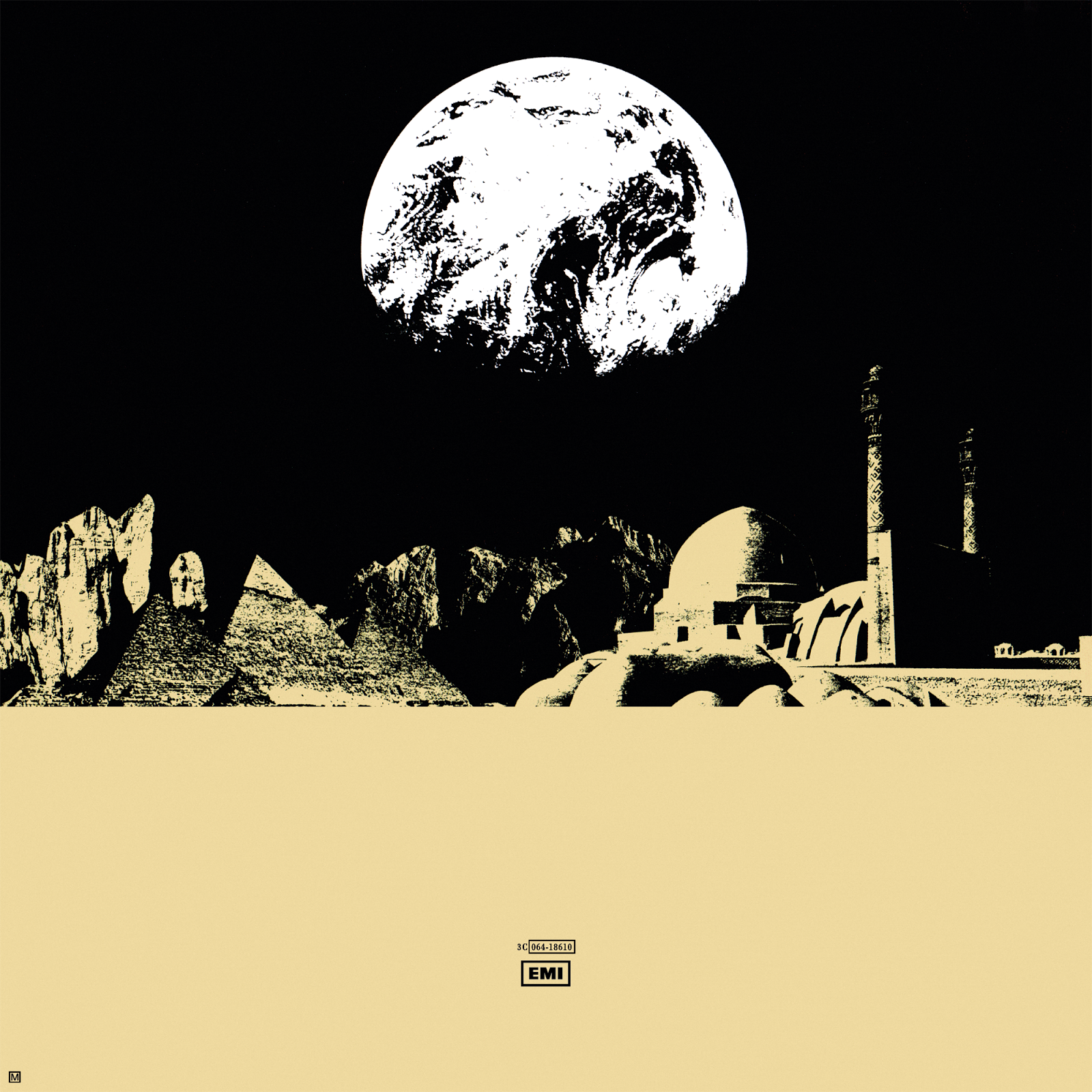
Recorded just one month earlier, "Restoration - The Ancient School of Restoration" was released by EMI Italiana with catalogue number 3C 064-18610 in March 1983; to date it has never been officially reissued on CD.

Once again, the album was produced by Angelo Carrara and co-written hand-in-hand by Pio and Battiato. Music, arrangements and stylistic features are quite similar to those contained on the LPs released by Battiato under his own name during the early '80.


Francesco Messina, Giusto Pio, Franco Battiato, Alberto Radius and Donato Scolese, circa 1981-82

«"Restoration" includes a few instrumental pieces composed by Franco (Battiato) and me; I also handled all the violin parts. It is mostly an album of Pop music, but it takes its title from a well known pavane by the French composer Gabriel Faurè that we reworked, as we had previously done with Bach, in our completely independent and peculiar way. In fact, when we registered it with SIAE (Italian collecting society for composers' copyrights) we presented both the original Faurè score and ours, so that the percentage of rights is shared between the heirs of the musician and us...» [2]

"Restoration" features the same team of musicians from the 'Battiato Factory' who already worked on "Legione straniera", including Paolo Donnarumma on bass, famous guitarist Alberto Radius and keyboardist Filippo Destrieri.

On this work Enzo 'Titti' Denna (...who probably engineered "Legione straniera" without being credited on the sleeve for an unknown reason...) also takes care of the Fairlight CMI programming, which is played by Destrieri. Compared to the previous release, "Restoration" sounds a bit more electronic to my ears, just like "L'arca di Noè" when compared to "La voce del padrone".

The elegant album cover, based on a drawing by Austrian painter Max Kurzweil, was designed by Francesco Messina «with the intention to 'paraphrase' the graphics of Deutsche Grammophon.» [3]

As already happened for the song "Legione straniera" the previous year, Battiato and Pio also took care of directing a promotional videoclip for the title track. Anyway, no song was issued as a single to 'drive' the album if we exclude this promotional item; I must admit that I don't remember having ever watched that clip then and unfortunately it hasn't resurfaced on YouTube yet... Anyway, you can watch a live performance of "Restoration" here.

One song from the album, "Rodolfo Valentino", was later given lyrics by Francesco Messina and released as a single by Italian singer Farida. Curiously enough, Giusto Pio was not credited as author on this release and Battiato appeared as Kui, one of his psudonyms... This version is available here.

That's all Folks!


Sources:

[1] translated from this interview;

[2] translated from the book "Dedicato a Giusto Pio";

[3] translated from the book "Ogni tanto passava una nave - Viaggi e soste con Franco Battiato" by Francesco Messina.


Here's the complete credits and personnel list as translated from the back cover of "Restoration - The Ancient School of Restoration":

Music and arrangements by Franco Battiato and Giusto Pio.
Produced by Angelo Carrara.
Art Director: Francesco Messina
Music Publisher: Belriver s.r.l.

Front cover by Francesco Messina.
Drawing on front cover by Max Kurzweil.
Picture on back cover: Ilvio Gallo.

Keyboards: Filippo Destrieri
Drums: Alfredo Golino
Bass: Paolo Donnarumma
Guitars: Alberto Radius
Fairlight Computer (programming): Enzo 'Titti' Denna
Fairlight Computer (performing): Filippo Destrieri
Violins: Giusto Pio
Choir: Franco Battiato and Alberto Radius

Recorded at Radius Studio in February 1983.
Sound Engineer: Enzo 'Titti' Denna


Giusto Pio as he appears on the back cover of "Restoration"


The following clips offer a preview of the remastered album, please enjoy "Gente a lavoro", "Radio Taxi", "Rodolfo Valentino" and "Restoration"!


...and here's a live rendition of the title-track as performed in 1984 for an Italian television show; the audio sucks, but still is nice to see Mr. Pio and the band on stage!


More information about "Restoration - The Ancient School of Restoration", Giusto Pio and Franco Battiato is available here:

http://www.giustopio.it/

http://digilander.libero.it/giustopio

http://it.wikipedia.org/wiki/Giusto_Pio

http://digilander.libero.it/gianni61dgl/giustopio.htm

http://www.stefanomeneghetti.it/2010/04/giusto-pio/

http://www.frontiereprogetti.com/index.php?startpage=eventi&id=127

http://www.discogs.com/artist/369428-Giusto-Pio

https://www.debaser.it/giusto-pio

http://digilander.libero.it/giustopio/intervista.htm

http://www.musicletter.it/?x=entry:entry111208-130248

http://dentroisecondi.blogspot.com/2013/07/giusto-pio-se-ne-consiglia-la-lettura.html

http://aliceedintorni.blogspot.com/2010/12/dedicato-giusto-pio-11-gennaio-2011.html

http://www.arte.go.it/2015/01/18/video-latelier-di-giusto-pio-1/

https://it.wikipedia.org/wiki/Restoration_%28Giusto_Pio%29

https://www.debaser.it/giusto-pio/restoration/recensione

http://en.wikipedia.org/wiki/Franco_Battiato

http://www.youtube.com/watch?v=GjvL7E0J8bQ

http://www.youtube.com/watch?v=oFjXwOB26MU

http://www.youtube.com/watch?v=U07EtWdyk3Q

https://www.youtube.com/watch?v=ja8iWzit_vY

https://www.youtube.com/watch?v=Y2XpAAQZ1JQ

https://www.youtube.com/watch?v=KCwPaltMbOM

https://www.youtube.com/watch?v=XUlfOk1gnkE

https://www.youtube.com/watch?v=sN7BNsxiUx8

https://www.youtube.com/watch?v=Dnx_k6SYAUM

https://www.youtube.com/watch?v=x9PXZNhL0qY

https://www.youtube.com/watch?v=Tsyp_39RFRo


If you have any other useful information about this post or if you spot any dead links, please get in touch with me at stereocandies [at] hotmail [dot] com or leave a comment in the box below, thank you!

Related Posts Plugin for WordPress, Blogger...