Showing posts with label Brian Bennett. Show all posts

Wednesday, 27 September 2017

HEAT EXCHANGE "ONE STEP AHEAD" (1979)


Brian Lawrence Bennett was born in Palmers Green, North London, on February 8th, 1940. His interest in music dated from an early age, and as a small child he used to listen to radio broadcasts from the Aeolian Hall. Soon he was hooked on the sounds of Glenn Miller and the other Big Bands of the era.

He became fascinated by drums and percussion and lists Gene Krupa, Louis Bellson and, especially, Buddy Rich as his early musical heroes. By 1953, Brian had saved up enough money to purchase a rudimentary drumkit and he practiced constantly. Before long he was performing regularly with his school orchestra and youth club big bands.

He began playing professionally even before he left school, with his own Tony Brian Trio and The Esquires Dance Band. He also began composing music and writing songs from the age of fourteen onwards.

Brian's initial background was in Jazz and Swing, but by 1956 - the year he left school at sixteen to play drums in a Ramsgate skiffle group performing for holiday makers - he was equally adept at playing Rock'n'Roll. «It wasn't originally by choice», recalled Brian, «but there were more and more jobs being offered and I didn't want to turn them down!».

A teenage prodigy, he became the house drummer at the legendary 2i's Cofee Bar - now known as the birthplace of British Rock'n'Roll - in London's Soho, backing artists like Tony Sheridan, Terry Dene, Vince Eager and Vince Taylor, and from there he earned a regular spot on the Jack Good's legendary TV music showcase Oh Boy!.

By 1959, Bennett was regarded as one of the top Rock & Roll drummers in England and one of the most sought-after percussionists around. That year he joined The Wildcats, the backing band of Rock & Roll singer Marty Wilde. He remained with Wilde for two years, also playing outside live gigs with stars such as Tommy Steele, and in 1960 he embarked on the legendary tour featuring Eddie Cochran, Gene Vincent and Marty Wilde.

When Marty embarked upon a career in films and musicals, The Wildcats evolved into The Krew Kats and cut a brace of fine instrumentals, including a stunning version of Chet Atkins' "Trambone". After a brief stint as an orchestral pit drummer, in October of 1961 lightning struck for Bennett's career when Tony Meehan - then regarded as the top drummer in England - quit The Shadows, who were then the top Rock & Roll British band as well as the backing group for Cliff Richard, the top singer in the field.


The opening was one of the most coveted in the country - The Shadows were regularly topping the charts in their own right, and their concerts with Richard were riotous affairs, huge sell-outs in front of hordes of screaming fans across England - Bennett was offered the spot. He accepted and was with the group across a string of hit singles and albums, lasting through their intended official breakup in 1968, on the occasion of the group's tenth anniversary as a professional band.

His drumming talents were but one aspect of his monumental musical contribution to the band. He wrote or co-wrote over 100 tracks for them, as well as over 20 compositions for Cliff Richard... He also earned his first Ivor Novello award for composing the title theme to the movie "Summer Holiday", which starred Richard and the band - he also contributed songs to their subsequent movies, up through "Finders Keepers".

A favourite feature for the audience at any Shadows' concert was always his drum solo, with "Little B" - a must showcase for every Beat-Drummer in the pre-Beatles era - perhaps being the best known and highly regarded piece which has inspired countless drummers over the years and is still performed now by budding young drummers at Shadows' music clubs throughout the U.K.

Many drummers back then considered each new Shadows' record as a drum lesson - learning how to play the fills in classic tunes such as "The Rise and Fall of Flingel Bunt" and "Foot Tapper".

In 1967 Bennett released his first solo LP exploring Jazz and Easy Listening territories with the aptly entitled "Change of Direction", which was followed in 1969 by "The Illustrated London Noise", a return to Rock and Funky music.

Following the 1968 "farewell" Shadows concert, he participated along with lead guitarist Hank Marvin and bassist John Rostill in the band's brief 1969 reunion for a tour of Japan.

By the early '70s Brian was a highly successful and much sought after session drummer working with a vast array of different artists including Ella Fitzgerald, Olivia Newton-John, Engelbert Humperdinck, Richard Harris, The Walker Brothers and many more.

With The Shadows on extended hiatus, Bennett turned to other areas of music. He'd already developed some insights into the mechanics of music through his work as a songwriter, and he took a correspondence course in arranging and orchestration that, when added to his natural ability as a composer, ended up reshaping his whole career. He'd always provided vocals on the Shadows' own recordings, and now he re-established his performing credentials on the piano as well as the vibraphone.

He became Cliff Richard's musical director and formed The Brian Bennett Orchestra touring the world including the first Western rock concerts performed in Russia. Even more important, amid the string of hit albums with Richard that followed, he also started writing music for movies / television and part of this huge load of work was published on many library records by specialized labels like KPM Music and Bruton Music.


Brian Bennett in his studio, circa late '70s

In 1977 he published his third proper solo album, "Rock Dreams", available here and credited to the Brian Bennett Band, which was followed the next year by "Voyage - A Journey Into Discoid Funk", a Disco/Funk opus that was recently remastered and re-released on vinyl and digital download. 1979 was also a busy year for Bennett, who was commissioned a Disco album by EMI; the result was "One Step Ahead", the subject of this post, credited to the Heat Exchange project.

Later on, Brian developed yet another career composing music for films. During the '80s, he was awarded his second Ivor Novello award (for 25 years services to music) and wrote music for a wide range of programmes including "Dallas", "Knotts Landing", "Pulaski", The Royal Wedding of Prince Charles and Lady Diana Spencer (!!!), the "BBC Golf" theme, "The Sweeney", Dennis Hopper's film "The American Way" and Ellen Barkin and David MacCallum's "Terminal Choice". In 1990, he won his third Ivor Novello award for Best Score For a Television Series (The Ruth Rendell Mysteries).

From the 1990s to 2000, he was in demand more than ever and he composed music for the long-running series "The Knock", "Nomads of the Wind", "Global Sunrise", "Living Britain", "Dirty Work", "David Jason In His Element" and Hansjörg Thurn's film "The Arpist".

In 2001 Bennett was the proud recipient of the Gold Badge Award given by the British Academy of Songwriters, Composers and Authors. He also won the Royal Television Society Craft & Design Awards 2000/2001 for Best Original Title Music for "Murder In Mind". In 2004 he was awarded an OBE and collected his award from The Queen at Buckingham Palace.

In 2009 and 2010 Cliff Richard and The Shadows embarked on a 50th anniversary tour with 36 shows in the U.K., Europe, Australia, New Zealand and South Africa. More recently, Bennett wrote with his son, Warren, 24 episodes of the award-winning TV series "New Tricks". He also recorded and produced an album with Cliff Richard and The Shadows.

In 2015 he worked on a musical called "Soho" and the music for a production called "Starchild". His latest album, entitled "Shadowing John Barry - New Recordings for Guitar and Orchestra", was released in February 2016... Although he will always be associated with The Shadows, playing drums for them is merely one aspect of a glittering musical career.


"One Step Ahead" contains the following tracks:

01. You're Gonna Love This (7:07)
02. Shake Down (6:55)
03. Love Is the Reason (7:58)
04. One Step Ahead (6:25)
05. Check It Out (5:52)
06. Lost On You (7:04)

All tracks were remastered from the original vinyl and CD re-issue in September 2017 and are available in FLAC lossless format, along with complete artwork reconstruction and printable PDF files.

As usual, please have a look at the comments for the download links.
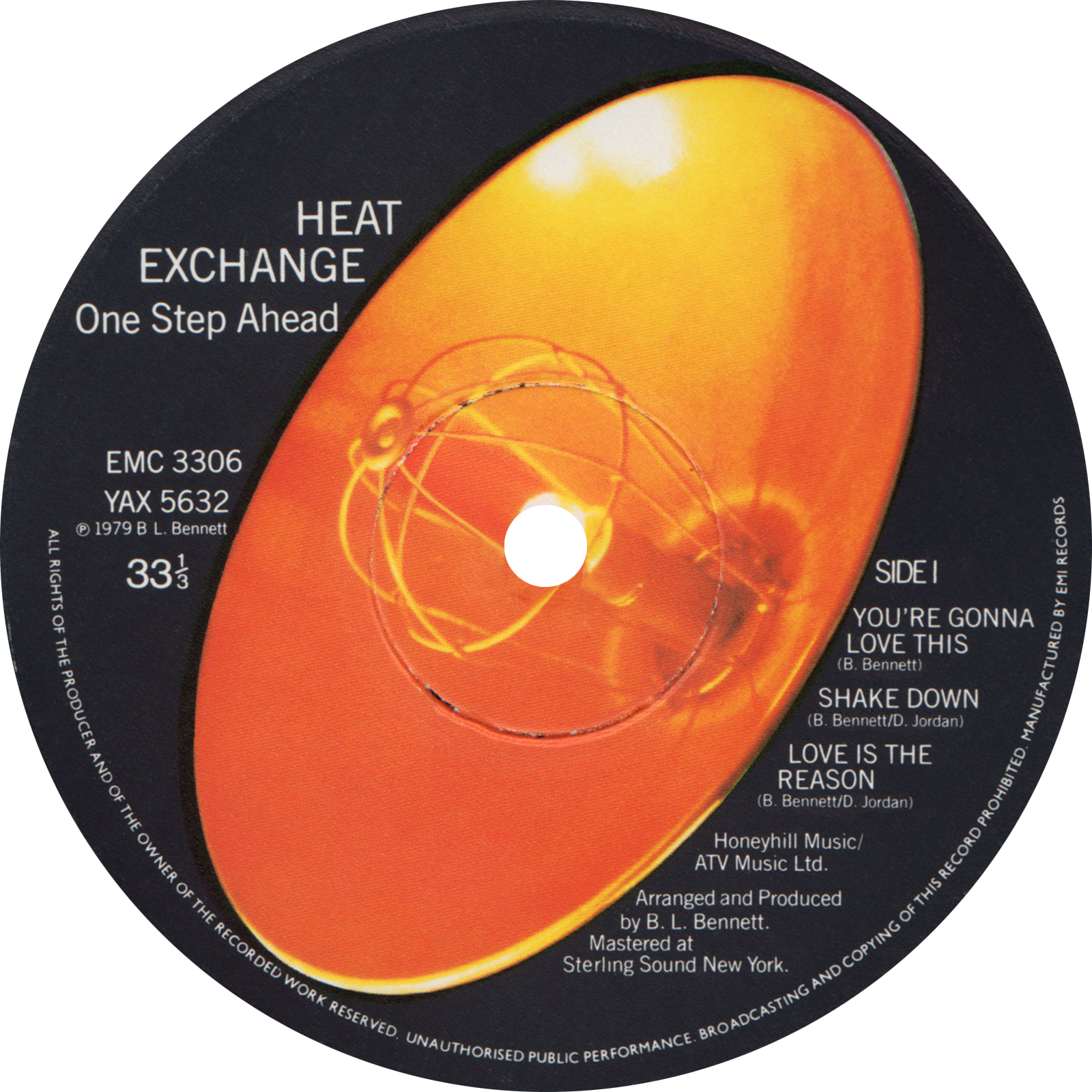


"One Step Ahead" was released in the U.K. by EMI with cat. number EMC 3306 sometimes in 1977. The album was also released on cassette with cat. number TC-EMC 3306 and spawned a 12" single that featured "Shake Down" b/w "You're Gonna Love This" (12EMI 2988); edited versions of the same tracks were also released as a 7" single (EMI 2988).

In 1994, the album was re-released on CD by See For Miles Records under their C-Five Records inprint. The booklet offers precious information about Bennett and the album. The original notes were compiled by Rob Bradford, the following is a slightly edited and updated version:

«In 1985 Brian Bennett was delighted when he was commissioned to provide the complete score for the film "Terminal Choice". «Basically», he remarks, «I got that job because it was financed and set up in America. To the Americans, I was just another composer and they judged my music purely on its own merits. That was great. No preconceptions, you see? The majority of Americans have never even heard of The Shadows». In conversation it's a theme he returns to over and over again. The dangers of being musically typecast or pigeonholed. He cites many instances where he feels that his music has been dismissed as out of hand. Something along the lines of: "Brian Bennett? Isn't he The Shadows' drummer? We're looking for a musician, a composer - not a drummer!" In actual fact, playing drums for The Shadows for almost thirty years is only one facet of Brian's immense musical talent. His contribution to The Shadows was monumental and he will always, inevitably, be associated with them. However, Brian's other musical ventures have been both numerous and varied and his output of music as a composer has been truly prodigious.

Brian was always much more than just a beat group drummer. He studied the violin and musical theory for many years and successfully completed a course on orchestral arranging. In 1967 he released "Change of Direction", thus making him the first Shad to release a solo album. It was to be the first of many such projects. During the '70s Brian became a top session drummer as well as beginning his prolific output of library, TV and film music.

Heat Exchange was a commission that Brian undertook in 1979. He'd heard that EMI were looking for an album in the style of the then current Funk / Disco craze. «It all sprang from the New York club scene,» recalls Brian, «The Bee Gees struck lucky with "Saturday Night Fever" and then everyone went disco crazy. But one of the true originators was a guy called Sylvester. He was my starting point.» Sylvester James, Jr. was the doyen of disco music singers; his biggest hits were "You Make Me Feel (Mighty Real)" and "Dance (Disco Heat)".


As ever, Brian assembled a talented team of musicians including: Rickie Hitchcock (guitar), Les Hurdle (bass) and Mike Moran (keyboards). The vocalist we are not at liberty to divulge. I can tell you that he was British and has had chart success in his own right... «Guaranteed anonynimity was one of the conditions he insisted upon. He only did it as a one-off, for the money. But, I have to say that he was utterly brilliant. I've a feeling that Cliff Hall was on some tracks as well. For "Shake Down", I got Chris Lawrence to play the bass line. He had a genuine, groovy, pumping funk-disco style. I'm no lyricist. I enlisted a guy called Dave Jordan. He and I were on the staff of ATV music. He was someone I knew from weekly team meetings. I also had a brass section on there. I was thinking of stuff like Earth, Wind & Fire... Isaac Hayes and so on. I'd go over the scores with them... make suggestions... while we were all sitting around with drinks. All very relaxed. I wanted a party atmosphere. Then, they'd just cut it... live in the studio... hit a groove. I was delighted with it. When the whole thing was completed, I took it to Stirling Sound Studios in Manhattan to get it cut and mastered, to achieve that big 'Tuff' sound. Another thing that's worth mentioning is that all the drumming and percussion is yours truly. By that I mean that there are no drum machines, drum boxes, samplers, synth drums or whatever. No effects at all.»

It certainly does sound remarkably authentic. So authentic that it would have surely been chart material if given to a 'name' disco act to cover. This wasn't pastiche, it was Brian composing in a definite style. I asked Brian if he was pleased with the end product, particularly with regard to its authentic Disco style. «I was quite pleased with it. As a composer, you should be able to adapt to any particular style. Very few people realised it was me. It had the words 'Produced by B.L. Bennett' somewhere on the sleeve, in very small print. That was deliberate. The reviews were great in that they said things like... 'A tight set obviously recorded by top New York session men.' Great. It just goes to show that some critics don't know who they're listening to, or what they're talking about!»


"One Step Ahead", original rejected front cover artwork reconstruction


My copy of the album contains some notes - handwritten by the previous owner on the Side 2 center label - about the musicians featured on the recordings. Some of them are confirmed by Bennett himself in the interview that is quoted on the 1994 CD re-release; unfortunately the name of the singer remains a mystery... The picture above is based upon a tiny image included on the booklet of the aforementioned CD album.

Here's the credits and personnel list of "One Step Ahead":

Les Hurdle: bass
Chris Lawrence: bass on "Shake Down"
Rickie Hitchcock: guitar
Mike Moran: keyboards
Cliff Hall: additional keyboards
Dave Lawson: additional keyboards
Frank Ricotti: percussion
Brian Bennett: drums
Vicky Brown: backing vocals

All songs by Brian Bennett, except "Lost On You" written by Brian Bennett and Warren Bennett.

Lyrics on "Shake Down", "Love Is the Reason" and "Check It Out" by Dave Jordan.

Arranged and produced by Brian Lawrence Bennett.

Mastered at Sterling Sound, New York.


Brian Bennett playing drums


The following clips offer a complete preview of the remastered album, enjoy!


More information about Brian Bennett is available here:

https://www.discogs.com/artist/516363-Heat-Exchange

https://www.discogs.com/Heat-Exchange-One-Step-Ahead/master/617375

https://www.discogs.com/artist/108870-Brian-Bennett

https://rateyourmusic.com/artist/brian_bennett

http://en.wikipedia.org/wiki/Brian_Bennett_%28musician%29

http://www.brianbennettmusic.co.uk/

https://www.youtube.com/watch?v=_p671Y__w8U

http://www.mikedolbear.co.uk/story.asp?StoryID=1449

http://www.drummerworld.com/drummers/Brian_Bennett.html

http://www.allmusic.com/artist/brian-bennett-mn0000621102

http://www.whosampled.com/Brian-Bennett/sampled/?sp=1


If you have any other useful information about Brian Bennett, Heat Exchange and "One Step Ahead" - especially corrections and improvements to this post - or if you spot any dead links, please get in touch with me at stereocandies [at] hotmail [dot] com or leave a comment in the box below, thank you!

Wednesday, 5 August 2015

BRIAN BENNETT BAND "ROCK DREAMS" (1977)


Brian Lawrence Bennett was born in Palmers Green, North London, on February 8th, 1940. His interest in music dated from an early age: as a small child he used to listen to radio broadcasts from the Aeolian Hall. He was soon hooked on the sounds of Glenn Miller and other Big Bands of the era.

He became fascinated by drums and percussion and lists Gene Krupa, Louis Bellson and, especially, Buddy Rich as his early musical heroes. By 1953, Brian had saved up enough money to purchase a rudimentary drumkit and he practiced constantly. Before long he was performing regularly with his school orchestra and youth club big bands.

He began playing professionally even before he left school, with his own Tony Brian Trio and The Esquires Dance Band. He also began composing music and writing songs from the age of fourteen onwards.

Brian's initial background was in Jazz and Swing, but by 1956 - the year he left school at sixteen to play drums in a Ramsgate skiffle group performing for holiday makers- he was equally adept at playing Rock'n'Roll. «It wasn't originally by choice», recalled Brian, «but there were more and more jobs being offered and I didn't want to turn them down!».

A teenage prodigy, he became the house drummer at the legendary 2Is Club - now known as the birthplace of British Rock'n'Roll - in London's Soho, backing artists like Tony Sheridan, Terry Dene, Vince Eager and Vince Taylor, and from there he earned a regular spot on the Jack Good's legendary TV music showcase Oh Boy!.

By 1959, Bennett was regarded as one of the top Rock & Roll drummers in England and one of the most sought-after percussionists around. That year he joined The Wildcats, the backing band of Rock & Roll singer Marty Wilde.


He remained with Wilde for two years, also playing outside live gigs with stars such as Tommy Steele, and he was also featured on a Wildcats instrumental release of "Trambone" recorded as the Krew Kats. In 1960 he embarked on the legendary tour featuring Eddie Cochran, Gene Vincent and Marty Wilde.

When Marty embarked upon a career in films and musicals, The Wildcats evolved into The Krew Kats and cut a brace of fine instrumentals. After a brief stint as an orchestral pit drummer, in October of 1961 lightning struck for Bennett's career when Tony Meehan - then regarded as the top drummer in England - quit The Shadows, who were then the top Rock & Roll British band as well as the backing group for Cliff Richard, the top singer in the field.

The opening was one of the most coveted in the country - The Shadows were regularly topping the charts in their own right, and their concerts with Richard were riotous affairs, huge sell-outs in front of hordes of screaming fans across England - Bennett was offered the spot. He accepted and was with the group across a string of hit singles and albums, lasting through their intended official breakup in 1968, on the occasion of the group's tenth anniversary as a professional band.

His drumming talents were but one aspect of his monumental musical contribution to the band. He wrote or co-wrote over 100 tracks for them, as well as over 20 compositions for Cliff Richard... He also earned his first Ivor Novello award for composing the title theme to the movie "Summer Holiday", which starred Richard and the band - he also contributed songs to their subsequent movies, up through "Finder's Keepers".

A favourite feature for the audience at any Shadows' concert was always his drum solo, with "Little B" - a must showcase for every Beat-Drummer in the pre-Beatles era - perhaps being the best known and highly regarded piece which has inspired countless drummers over the years and is still performed now by budding young drummers at Shadows' music clubs throughout the UK.

Many drummers back then considered each new Shadows' record as a drum lesson - learning how to play the fills in classic tunes such as "The Rise and Fall of Flingel Bunt" and "Foot Tapper".


"Rock Dreams" original insert (front)

In 1967 Bennett released his first solo LP exploring Jazz and Easy Listening territories with the aptly entitled "Change of Direction", which was followed in 1969 by "The Illustrated London Noise", a return to Rock and Funky music.

Following the 1968 "farewell" Shadows concert, he participated along with lead guitarist Hank Marvin and bassist John Rostill in the band's brief 1969 reunion for a tour of Japan.

By the early '70s Brian was a highly successful and much sought after session drummer working with a vast array of different artists including Ella Fitzgerald, Olivia Newton-John, Engelbert Humperdinck, Richard Harris, The Walker Brothers and many more.

With The Shadows on extended hiatus, Bennett turned to other areas of music. He'd already developed some insights into the mechanics of music through his work as a songwriter, and he took a correspondence course in arranging and orchestration that, when added to his natural ability as a composer, ended up reshaping his whole career. He'd always provided vocals on the Shadows' own recordings, and now he re-established his performing credentials on the piano as well as the vibraphone.

He became Cliff Richard's musical director and formed The Brian Bennett Orchestra touring the world including the first Western rock concerts performed in Russia. Even more important, amid the string of hit albums with Richard that followed, he also started writing music for movies / television and part of this huge load of work was published on many library records by specialized labels like KPM Music and Bruton.

In 1977 he published his third proper solo album, "Rock Dreams" - the subject of this post - credited to the Brian Bennett Band, which was followed the next year by the Disco/Funk opus "Voyage - A Journey Into Discoid Funk".


"Rock Dreams" original insert (back)

Later on, Brian developed yet another career composing music for films. During the '80s, he was awarded his second Ivor Novello award (for 25 years services to music) and wrote music for a wide range of programmes including "Dallas", "Knotts Landing", "Pulaski", The Royal Wedding of Prince Charles and Lady Diana Spencer (!!!), "BBC Golf" theme, "The Sweeney", Dennis Hopper's film "The American Way" and Ellen Barkin and David MacCallum's "Terminal Choice". In 1990, he won his third Ivor Novello award for Best Score For a Television Series (The Ruth Rendell Mysteries).

From the 1990s to 2000, he was in demand more than ever and he composed music for the long-running series "The Knock", "Nomads of the Wind", "Global Sunrise", "Living Britain", "Dirty Work", "David Jason In His Element" and Hansjörg Thurn's film "The Arpist".

In 2001 Bennett was the proud recipient of the Gold Badge Award given by the British Academy of Composers & Songwriters Society. He also won the Royal Television Society Craft & Design Awards 2000/2001 for Best Original Title Music for "Murder In Mind". In 2004 he was awarded an OBE and collected his award from The Queen at Buckingham Palace.

In 2009 and 2010 Cliff Richard and The Shadows embarked on a 50th anniversary tour with 36 shows in the UK, Europe, Australia, New Zealand and South Africa.More recently, Bennett wrote with his son, Warren, 24 episodes of the award-winning TV series "New Tricks". He also recorded and produced an album with Cliff Richard and The Shadows.

As of early 2015 he is working on a musical called "Soho", the music for a production called "Starchild" and an album of the music of John Barry played by The Brian Bennett Orchestra...

Although he'll always be associated with The Shadows, playing drums for them is merely one aspect of a glittering musical career.


"Rock Dreams" contains the following tracks:

01. Rock Dreams (Introduction) (1:17)
02. Rock & Roll Dreamer (4:13)
03. Banja Booga (2:44)
04. Rave On (2:49)
05. Milwaukee Massacre (3:01)
06. C'mon Everybody (2:54)
07. Thunderbolt (3:04)
08. Saturday Night Special (4:23)
09. The Girls Back Home (3:37)
10. Wallop (3:40)
11. Farewell To a Friend (2:48)
12. Drum Odyssey (5:36)
13. Rock Dreams (Finale) (1:02)

All tracks were remastered from the original vinyl and CD in July/August 2015, they are available as a FLAC lossless format file or as a high-quality 320 Kbps MP3 file. Both formats offer complete printable PDF artwork.

Before burning this album on CD-R using the provided CUE file you must convert the original FLAC audio file to WAV format using an appropriate software. Please have a look here if you need some help.

As usual, please have a look at the comments for the download links.


"Rock Dreams" was released in the U.K. by DJM Records with cat. number DJF 20499 sometimes in early 1977. The album was preceded by the "Thunderbolt" single which was released in September 1, 1976, which included "Clearing Skies", an exclusive cut, on the flip side.

Two more singles were excerpted from the album in 1977: "Saturday Night Special" b/w "Farewell To a Friend" on March 18, and "The Girls Back Home" b/w the exclusive track "Jonty Jump" on June 24. Strangely enough another single including "Wallop" and "The Girls Back Home" was released in Sweden by Mercury in 1981, about four years after the original album release...

In 1997, exactly twenty years later, the album was finally re-released on CD - coupled with Brian Bennett's "Voyage - A Journey Into Discoid Funk" by See For Miles Records. Unfortunately, all the tracks on this edition were remastered from vinyl, not from the original master tapes... Anyway, the booklet of such CD offers precious information about Bennett and the album. The notes were compiled by Rob Bradford, here's some of them:

«During the mid '70s, one of Brian Bennett's jobs was as producer/arranger/MD for DJM Records. It was during this period that the idea for "Rock Dreams" came to him:

«I'd actually been reading a book called "Rock Dreams". It was full of photographs and paintings. I realised that I actually knew, or had worked with many of the stars featured in the book. It was then that the idea for my own "Rock Dreams" proiect began to take shape. Instead of a photographic or pictorial album, what about a musical equivalent? It would be like a trip down memory lane for me, paying homage to a lot of the musicians I'd encountered along the way. That's how the whole thing started. I discussed the idea with a few friends and they said 'Go for it!' Luckily, the people at DJM thought that it was a good idea too. It was a lovely album to work on because all of the people involved were personal friends as well as being great musicians. I mean, I was even able to get Cliff to do backing vocals! So that's what it is, basically a musical journey from circa 1958 to 1978.»


Rock Dreams (Introduction and Finale): a gentle, dreamy little item with rippling synths and voices employed quasi-instrumentally as they intone "Rock Dreams". The structure is not dissimilar to a familiar passage from "Tubular Bells".
-------------------------------------------------------------------------------------------------
Brian: «Just a simple little number to lead into and out of the album.»

Rock and Roll Dreamer: a contemporary rocker, with Joe Fagin handling lead vocal chores. Excellent soloing from Alan Parker, without being over-indulgent. Very classy playing from all concerned. Clean sound and production.
-------------------------------------------------------------------------------------------------
Brian: «It's about the wannabes you come across. That, and the life of the roadies. Everybody dreams of making it.»

Banja Booga: a real fun instrumental. A sort of Hillbilly / Cajun / Bluegrass pastiche. Brilliant playing from both Alan Parker and Pete Willsher. It's not exactly "Duelling Banjos" or "Foggy Mountain Breakdown", but you get the picture.
-------------------------------------------------------------------------------------------------
Brian: «It was just a little C&W thing. Something that I'd always wanted to do. I wrote it with Alan Hawkshaw and Alan Parker.»

Rave On: a contemporary reading of the old Buddy Holly favourite. Launched on a raft of acoustic guitars, it's quite laid-back and yet charged with emotion and loaded with affection. Joe Brown's vocals are beautifully understated.
-------------------------------------------------------------------------------------------------
Brian: «I just had to have a Buddy Holly number on there. He was such a great influence on so many people. Not only that, but Jerry Allison was one of the first Rock'n'Roll drummers that I actually paid any attention to.»

Milwakee Massacre: a great boogie-woogie type rave up of a number. Alan Parker trots out some splendid Chuck Berry pastiche riffs, but the real star here is Alan Hawkshaw. He's a great pianist and he really cuts loose in the manner of 'Pine-Tops' Smith, Freddie 'Fingers' Lee, Jerry Lee Lewis et al. The Killer would love it!
-------------------------------------------------------------------------------------------------
Brian: «It wasn't a tribute to Jerry Lee Lewis as such, at least it didn't start out with that intention. It was just an excuse to indulge in one of those rocking boogie-woogie type things.»

C'mon Everybody: it has a contemporary, almost lazy feel to it, yet it harks back to the past as well. The early slapback echo feel is recreated quite effectively. This may sound heretical, but with the thumping backbeat, it's almost akin to what Mike Leander was doing with Gary Glitter! Nice percussive effects with handclaps and a tasty guitar break from Alan Parker. Plus, Joe Fagin performs a fair Eddie type vocal.
-------------------------------------------------------------------------------------------------
Brian: «I wanted this track on in memory of Eddie Cochran. The tour with him and Gene Vincent back in 1960 was one of my personal highlights. Eddie was a talented musician and a really nice guy. Everybody learned an awful lot from him on that tour. Big Jim Sullivan, Brian Locking, Colin Green and myself. Eddie wasn't just a great singer and guitarist, he played drums too!»

Thunderbolt: Shadows' fans have long admired this splendid instrumental. Indeed, they've lobbied the group to record it over the years. Alan Tarney is featured on bass and former Cliff Richard guitarist Terry Britten plays the elegiac lead with some aplomb. Great thunderstorm FX too.
-------------------------------------------------------------------------------------------------
Brian: «I'll come clean now. Many fans over the years have assumed that "Thunderbolt" was one of my library music pieces. It wasn't. It was written specifically for "Rock Dreams" to represent that part of my career spent with the Shads.»

Saturday Night Special: this is not the classic Lynyrd Skynyrd track of the same name, nor is it "Saturday Night Fever". But it is a track for the early '70s. The FX on the guitars is reminiscent of the [Shadows'] "Specs Appeal" era. Alan Parker, Les Hurdle and Alan Hawkshaw are all prominent. There's lots of percussion and funky bass guitar. Superb congas from Jim Lawless too.
-------------------------------------------------------------------------------------------------
Brian: «It's a sort of nod to the typical dance floor music of the time. I did a lot of sessions playing stuff like that. I thought it would be interesting to write something in a similar vein.»

The Girls Back Home: quite simply, this is a delightful recreation of the 1966/67 era Beach Boys sound. Sheer vocal delight. Tony Rivers, Stu Calver, John Perry and the rest turn in a quite magnificent performance. The fact that they recorded Beach Boys' styled vocals in the '60s as Tony Rivers and the Castaways undoubtedly helped!! I can certainly detect elements of "California Girls" and "God Only Knows" in there!
-------------------------------------------------------------------------------------------------
Brian: «I've always been a great Beach Boys' fan. Again, it was just a little exercise to write something in a similar vein. I was quite pleased with the end result. Actually, Warren [Bennett] helped to write this one. It must have been one of his earliest efforts. He was only about fifteen or sixteen at the time.»

Wallop: the kind of track where everyone has the chance to solo on various instrumental breaks, be it organ, keyboards, bass, drums, guitar or whatever. It's like a melange of heavy rock and Quo-like boogie, ...almost. There's even a Moog in there somewhere. But it's all very tasteful and veers away from histrionic over-indulgence.
-------------------------------------------------------------------------------------------------
Brian: «I wrote this one with Alan Hawkshaw, just to give everyone a chance to show off their playing skills a little bit. Also. again, an attempt to write something similar to a lot of the mainstream music that was around in 1978.»

Farewell To a Friend: sheer poetry, but without words. Beautiful acoustic guitars, shimmering synthesisers and plangent, keening pedal steel. Very nostalgic. It's just a gorgeous, yearning track played with great sensitivity.
-------------------------------------------------------------------------------------------------
Brian: «That was my tribute to John Rostill. A lovely guy and I still miss him.»

Drum Odyssey: I recall that when Brian released "Change of Direction" [back in 1967], reviewers were quick to point out that it simply wasn't a terribly self-indulgent Sandy Nelson type LP with loads of drum numbers on it. Brian has never been that way inclined, his drums have always been an integral part of the whole. On this track though his drum and percussion work is well to the fore. As ever though, it's not iust mindless incessant tub-thumping. No, it's intelligent and well-crafted. It's avant-garde and yet accessible with myriad overdubs. Just lots of drums, percussion and fascinating FX. Other instruments support relatively unobtrusively. Also, an early appearance of syndrums, which Brian used to good effect on 1979' "Riders In the Sky". A sort of Techno "Little 'B"!
-------------------------------------------------------------------------------------------------
Brian: «I always like to try out new ideas. There were some interesting technological developments at the time and I tried to utilise and incorporate some of them. I was fairly pleased with the overall effect.»


A magazine ad for the "Thunderbolt" single, late 1976

Listening to "Rock Dreams" in 1997, exactly twenty years after it was released, is a pleasant and edifying experience. It hasn't really dated and it still sounds quite fresh. It's probably a more relevant album now than it was then!

It's significant that artists then could put out carefully prepared albums that they were both really interested in and had a certain amount of direct control over. Brian did "Rock Dreams" simply because he genuinely wanted to do it! He wasn't at the mercy of executives who wondered whether or not this album would sell in excess of 250,000 copies.

The cover of "Rock Dreams" is made to look like a photograph from an album (...hands up those who remember adhesive photo-corners...). The cover painting was actually faithfully copied from a print of Brian lugging his drumkit down the platform of Bexhill station during the Eddie Cochran tour in 1960. «It was bloody hard work,» recalls Brian, «but I got nearly as good at carrying my drums as I did at playing them!»


Here's the complete credits and personnel list of "Rock Dreams" as they appear in the original liner notes:

Rock Dreams, 'Introduction' and 'Finale' (Bennett)
Alan Parker: electric guitars
Alan Hawkshaw: keyboards
Les Hurdle: bass
Brian Bennett: drums
Tony Rivers, John Perry, Stuart Calver: vocals

Rock'n'Roll Dreamer (Bennett)
Joe Fagin: vocals
Alan Parker: electric guitars
Alan Hawkshaw: keyboards
Les Hurdle: bass
Brian Bennett: drums

Banja Booga (Bennett / Parker / Hawkshaw)
Pete Willsher: Driftwood steel guitar
Alan Parker: 5 string banjo
Alan Hawkshaw: keyboards
Les Hurdle: Fender bass
Brian Bennett: drums and percussions

Rave On (Sonny West / Bill Tilghman / Norman Petty)
Joe Brown: vocals
Alan Parker: D6 dobro guitar, FT49 High Strung (1934)
Les Hurdle: Fender bass
Alan Hawkshaw: Fender piano
Brian Bennett: drums and percussions

Milwakee Massacre (Bennett / Parker / Hawkshaw)
Alan Hawkshaw: piano
Alan Parker: 1958 Fender Strat, D6 dobro guitar, guitar
Les Hurdle: bass
Brian Bennett: drums

C'mon Everybody (Eddie Cochran / Jerry Capehart)
Joe Fagin: vocals
Alan Parker: electric guitars
Alan Hawkshaw: keyboards
Les Hurdle: bass
Brian Bennett: drums
Cliff Richard, Tony Rivers, Dennis Waterman, John Perry, Stuart Calver: backing vocals

Thunderbolt (Bennett)
Terry Britten: guitar
Alan Tarney: bass
Graham Todd: piano
Brian Bennett: drums and tymps

Saturday Night Special (Bennett)
Alan Parker: Martin D28 and Les Paul standard guitars
Alan Hawkshaw: Clavinet, A.R.P. synthesizer, keyboards
Les Hurdle: bass
Brian Bennett: drums, tambourine, timbales and cowbells
Jim Lawless: congas

The Girls Back Home (Brian Bennett / Warren Bennett)
Tony Rivers: lead vocals and vocal arrangements deluxe
Alan Parker: guitars
Alan Hawkshaw: Fender piano, A.R.P. synthesizer
Les Hurdle: bass
Brian Bennett: drums, tuned woodblocks and percussion
Cliff Richard, John Perry, Stuart Calver: backing vocals

Wallop (Bennett / Hawkshaw)
Alan Parker: guitars
Alan Hawkshaw: Moog and keyboards
Les Hurdle: bass
Brian Bennett: drums and percussion

Farewell To a Friend (Bennett)
Alan Parker: Martin n° 4 gut-strung, solo guitar
Les Hurdle: bass
Pete Willsher: steel guitar

Drum Odyssey (Bennett)
Brian Bennett: Premium drums, congas, shakers, maracas, claves, bells, tuned woodblocks, Los drums, African talking drums, Premier piccolo snare drum, tymps + odds and sods
Alan Hawkshaw: Fender piano
Alan Parker: guitars
Les Hurdle: bass

Produced by Brian Bennett.

Engineered by Dick Plant at The Music Centre, Wembley, Middlesex

Cliff Richard appear courtesy of EMI Records Ltd.


Brian Bennett as he appears on the cover of the Dutch release of "Thunderbolt", 1976


The following clips offer a preview of the remastered album; here's "Drum Odyssey", "Banja Booga", "Saturday Night Special", "The Girls Back Home" and "Thunderbolt", enjoy!


More information about Brian Bennett is available here:

http://www.discogs.com/artist/934594-Brian-Bennett-Band

http://www.45cat.com/artist/the-brian-bennett-band

https://rateyourmusic.com/artist/brian_bennett

http://en.wikipedia.org/wiki/Brian_Bennett_%28musician%29

http://www.brianbennettmusic.co.uk/

http://zildjian.com/Artists/B/Brian-Bennett

http://www.brianbennettmusic.co.uk/art_rhythm.php

http://www.mikedolbear.co.uk/story.asp?StoryID=1449

http://www.drummerworld.com/drummers/Brian_Bennett.html

http://www.allmusic.com/artist/brian-bennett-mn0000621102

http://www.whosampled.com/Brian-Bennett/sampled/?sp=1


If you have any other useful information about Brian Bennett, and "Rock Dreams" - especially corrections and improvements to this post - or if you spot any dead links, please get in touch with me at stereocandies [at] hotmail [dot] com or leave a comment in the box below, thank you!

Friday, 8 August 2014

BRIAN BENNETT "VOYAGE - A JOURNEY INTO DISCOID FUNK" (1978)

edit 08.03.2017:

Good news!!! Recently I received a message from Kevin Griffith of Isle of Jura Records: after almost 40 years "Voyage - A Journey Into Discoid Funk" is going to be re-released soon as an heavyweight LP + digital download.

The album was completely remastered from the original master tapes by none other than Matt Colton and you can order it directly from Isle of Jura Records by clicking here. For those of you living in Europe, the album is distributed by Rush Hour and you can order it here.

I was kindly asked to remove all the download links from this post, so you won't find any. Now you've the chance to purchase an official release re-mastered by an engineer with steel in his balls, do not miss it!


Brian Lawrence Bennett was born in Palmers Green, North London, on February 8th, 1940. His interest in music dated from an early age: as a small child he used to listen to radio broadcasts from the Aeolian Hall. He was soon hooked on the sounds of Glenn Miller and other Big Bands of the era.

He became fascinated by drums and percussion and lists Gene Krupa, Louis Bellson and, especially, Buddy Rich as his early musical heroes. By 1953, Brian had saved up enough money to purchase a rudimentary drumkit and he practiced constantly. Before long he was performing regularly with his school orchestra and youth club big bands.

He began playing professionally even before he left school, with his own Tony Brian Trio and The Esquires Dance Band. He also began composing music and writing songs from the age of fourteen onwards.

Brian's initial background was in Jazz and Swing, but by 1956 - the year he left school at sixteen to play drums in a Ramsgate skiffle group performing for holiday makers- he was equally adept at playing Rock'n'Roll. «It wasn't originally by choice», recalled Brian, «but there were more and more jobs being offered and I didn't want to turn them down!».

A teenage prodigy, he became the house drummer at the legendary 2Is Club - now known as the birthplace of British Rock'n'Roll - in London's Soho, backing artists like Tony Sheridan, Terry Dene, Vince Eager and Vince Taylor, and from there he earned a regular spot on the Jack Good's legendary TV music showcase Oh Boy!.

By 1959, Bennett was regarded as one of the top Rock & Roll drummers in England and one of the most sought-after percussionists around. That year he joined The Wildcats, the backing band of Rock & Roll singer Marty Wilde.


He remained with Wilde for two years, also playing outside live gigs with stars such as Tommy Steele, and he was also featured on a Wildcats instrumental release of "Trambone" recorded as the Krew Kats. In 1960 he embarked on the legendary tour featuring Eddie Cochran, Gene Vincent and Marty Wilde.

When Marty embarked upon a career in films and musicals, The Wildcats evolved into The Krew Kats and cut a brace of fine instrumentals. After a brief stint as an orchestral pit drummer, in October of 1961 lightning struck for Bennett's career when Tony Meehan - then regarded as the top drummer in England - quit The Shadows, who were then the top Rock & Roll British band as well as the backing group for Cliff Richard, the top singer in the field.

The opening was one of the most coveted in the country - The Shadows were regularly topping the charts in their own right, and their concerts with Richard were riotous affairs, huge sell-outs in front of hordes of screaming fans across England - Bennett was offered the spot. He accepted and was with the group across a string of hit singles and albums, lasting through their intended official breakup in 1968, on the occasion of the group's tenth anniversary as a professional band.

His drumming talents were but one aspect of his monumental musical contribution to the band. He wrote or co-wrote over 100 tracks for them, as well as over 20 compositions for Cliff Richard... He also earned his first Ivor Novello award for composing the title theme to the movie "Summer Holiday", which starred Richard and the band - he also contributed songs to their subsequent movies, up through "Finder's Keepers".

A favourite feature for the audience at any Shadows' concert was always his drum solo, with "Little B" - a must showcase for every Beat-Drummer in the pre-Beatles era - perhaps being the best known and highly regarded piece which has inspired countless drummers over the years and is still performed now by budding young drummers at Shadows' music clubs throughout the UK.

Many drummers back then considered each new Shadows' record as a drum lesson - learning how to play the fills in classic tunes such as "The Rise and Fall of Flingel Bunt" and "Foot Tapper".


"Voyage - A Journey Into Discoid Funk", inner gatefold

In 1967 Bennett released his first solo LP exploring Jazz and Easy Listening territories with the aptly entitled "Change of Direction", which was followed in 1969 by "The Illustrated London Noise", a return to Rock and Funky music.

Following the 1968 "farewell" Shadows concert, he participated along with lead guitarist Hank Marvin and bassist John Rostill in the band's brief 1969 reunion for a tour of Japan.

By the early '70s Brian was a highly successful and much sought after session drummer working with a vast array of different artists including Ella Fitzgerald, Olivia Newton-John, Engelbert Humperdinck, Richard Harris, The Walker Brothers and many more.

With The Shadows on extended hiatus, Bennett turned to other areas of music. He'd already developed some insights into the mechanics of music through his work as a songwriter, and he took a correspondence course in arranging and orchestration that, when added to his natural ability as a composer, ended up reshaping his whole career. He'd always provided vocals on the Shadows' own recordings, and now he re-established his performing credentials on the piano as well as the vibraphone.

He became Cliff Richard's musical director and formed The Brian Bennett Orchestra touring the world including the first Western rock concerts performed in Russia. Even more important, amid the string of hit albums with Richard that followed, he also started writing music for movies / television and part of this huge load of work was published on many library records by specialized labels like KPM Music and Bruton.

In 1977 he published his third proper solo album, "Rock Dreams", credited to the Brian Bennett Band, which was followed the next year by the Disco/Funk opus "Voyage - A Journey Into Discoid Funk", the subject of this post.


Brian Bennett, DJM promotional picture, circa 1977-78

Later on, Brian developed yet another career composing music for films. During the '80s, he was awarded his second Ivor Novello award (for 25 years services to music) and wrote music for a wide range of programmes including "Dallas", "Knotts Landing", "Pulaski", The Royal Wedding of Prince Charles and Lady Diana Spencer (!!!), "BBC Golf" theme, "The Sweeney", Dennis Hopper's film "The American Way" and Ellen Barkin and David MacCallum's "Terminal Choice". In 1990, he won his third Ivor Novello award for Best Score For a Television Series (The Ruth Rendell Mysteries).

From the 1990s to 2000, he was in demand more than ever and he composed music for the long-running series "The Knock", "Nomads of the Wind", "Global Sunrise", "Living Britain", "Dirty Work", "David Jason In His Element" and Hansjörg Thurn's film "The Arpist".

In 2001 Bennett was the proud recipient of the Gold Badge Award given by the British Academy of Composers & Songwriters Society. He also won the Royal Television Society Craft & Design Awards 2000/2001 for Best Original Title Music for "Murder In Mind". In 2004 he was awarded an OBE and collected his award from The Queen at Buckingham Palace.

In 2009 and 2010 Cliff Richard and The Shadows embarked on a 50th anniversary tour with 36 shows in the UK, Europe, Australia, New Zealand and South Africa.More recently, Bennett wrote with his son, Warren, 24 episodes of the award-winning TV series "New Tricks". He also recorded and produced an album with Cliff Richard and The Shadows.

As of early 2015 he is working on a musical called "Soho", the music for a production called "Starchild" and an album of the music of John Barry played by The Brian Bennett Orchestra...

Although he'll always be associated with The Shadows, playing drums for them is merely one aspect of a glittering musical career.


"Voyage - A Journey Into Discoid Funk" contains the following tracks:

01. Voyage (6:25)
02. Solstice (6:21)
03. Chain Reaction (6:41)
04. Pendulum Force (6:24)
05. Air Quake (4:15)
06. Ocean Glide (6:41)

All tracks were remastered from the original vinyl in July 2014, they are available as a FLAC lossless format file or as a high-quality 320 Kbps MP3 file. Both formats offer complete printable PDF artwork.

Before burning this album on CD-R using the provided CUE file you must convert the original files to WAV format using an appropriate software. Here's an option for FLAC to WAV conversion and one for MP3 to WAV conversion.

As usual, please have a look at the comments for the download links.


"Voyage - A Journey Into Discoid Funk" was released in the U.K. by DJM Records with cat. number DJF 20532 in late April1978. During the same year the record was also published in other countries across Europe, and in 1997 it was finally re-released on CD - coupled with Brian Bennett Band's "Rock Dreams" by See For Miles Records.

Unfortunately, all the tracks on this edition were remastered from vinyl, not from the original master tapes... Anyway, the booklet of such CD offers precious information about Bennett and the album. The notes were compiled by Rob Bradford, here's some of them:

«...At this point in his career, Brian was employed as a producer/arranger by DJM. This put him in a position to fulfil some of his ideas for solo projects. According to Brian, there were several strands of thought behind "Voyage".

«I suppose that I was already becoming a bit 'Themic', if you like. Maybe it was leading up to creating music to complement or invoke visual imagery. I had this idea of the earth in space. Also, "Star Wars" was all the rage, so this space fantasy thing was very much in vogue. There were groups like Space and Meco creating interesting, yet commercial sounds. I was also listening to Brian Eno. I liked a lot of the material he was putting out. It was a different genre and I wanted to see if I could write some material along those lines. We probably realised that it wasn't going to be a great commercial success, but then again, you can never be absolutely certain. There was always a chance. I was delighted to be given the go ahead, so it was a voyage around the earth, if you like. One thing that I really hated was the sub-title, "A Journey Into Discoid Funk". Terrible! That was the idea of the marketing people, 'we've got to call it something, categorise it...' that kind of thing. I wasn't too keen on the sleeve either. I had some ideas of my own, a little montage sequence, representing each track. That was dismissed out of hand. I wasn't too keen on the spaceship thing. I was pleased with the music, though. I was listening to it recently for the first time in nearly twenty years. It still sounds good. I know that the critics at the time didn't like it much, but that didn't bother me. I stand by the quality of the music and the playing. It was all done live in the studio. It was recorded at The Music Centre, Wembley. All of the drums were played live and so were the synths. We were experimenting with all the latest sounds and technology, but the human element was still there. Nowadays, there'd be a lot more use made of computers, programming and sequencing. It was very enioyable. Francis Monkman and Alan Jones were both outstanding.»


With material of this nature, it's really up to the listener to make what he/she will of each track, which create differing moods and atmospheres. I'll make my own brief comments and than add a few of the appropriate descriptions typical of those found on Brian's library music albums.

Voyage: quite 'filmic' as Brian describes it. If orchestrated, then not out of place on the "Star Wars" type of soundtrack. Very stylish, mixing elements of groups such as Tangerine Dream, Kraftwerk and The Orb. Present are elements reminiscent of Emerson, Lake & Palmer's arrangement of Coplands' "Fanfare For the Common Man". ('Prestigious, expansive, epic theme').

Solstice: a very quiet, gentle relaxing opus. Very dreamy and subtle. Ethereal, 'New Age'. ('Serene, slow, timeless atmosphere').

Chain Reaction: opening with slow, long rolls on heavily phased drums, the sound is similar to that achieved by Carl Palmer on parts of ELP's "Brain Salad Surgery" before launching into a quasi-2001 - type almost disco theme. ('Scenic, with underlying suspense').

Pendulum Force: ('Cool and funky, effervescent, unhurried, confident, optimistic stabs').

Air Quake: a very dramatic number, with lots of Sci-Fi type FX. Definitely echoes of Jean Michelle-Jarre and "Equinoxe'. ('Abstract, uptempo, exciting with stabs').

Ocean Glide: a beautiful, accessible piece which is actually Brian's favourite track on the album. There are definitely hints of a visual/aural combination here. This music could easily fit in with the type of music that Brian now provides for TV documentaries. A musical comment on the visual scene of your choice. It reminds of Mike Oldfield at his best. Mellifluous and romantic, but not cloyingly sentimental. ('Gentle intro, expansive melodic theme, epic romantic montage featuring piano').

When originally released during the height of the Punk Rock era, this album was ahead of its time. It received a mauling from dismissive critics. If I remember correctly, someone described "Voyage" along the lines of '...an album to play to your hippy mother's maiden aunt', whilst (even more unkindly) another merely described it as an album to put on in order to drive away undesirable guests from your party... early. Well, I beg to differ. In 1997, the music hasn't dated, it's refreshingly contemporary. Treat it as high quality New Age, atmospheric, ambient and you won't be disappointed.»


A magazine ad for the imminent release of "Voyage", April 1978

Here's the complete credits and personnel list of "Voyage - A Journey Into Discoid Funk" as they appear in the original liner notes:

Keyboards: Francis Monkman
Bass Guitar: Alan Jones
Percussion: Brian Bennett

Recorded and Engineered by Dick Plant.
Assistant Engineer: Barry Kidd

Synthesizers programmed and realized by Francis Monkman.

Recorded at the Music Centre, Wembley.

Written, Arranged and Produced by Brian Bennett.

Aphex processed

Sleeve Design: Roy Simpson Ltd.


Brian Bennett, circa late '70s / early '80s

The following biographies of Francis Monkman and Alan Jones were written by Rob Bradford in 1997 and are part of the aforementioned booklet included in the CD version of "Voyage / Rock Dreams":

«The classically trained Francis Monkman was a graduate of The Royal Academy of Music. He was a keyboard player and organist of phenomenal talent. After graduating from in the late '60s, he soon decided that his future lay within the sphere of Popular, rather than Classical music.

Monkman rapidly teamed up with the classically-trained violinist Darryl Way, who had similar ideas. Along with charismatic female vocalist Sonia Kristina, they formed the influential outfit Curved Air. Monkman stayed for "Air Conditioning", "Second Album" and "Phantasmagoria". He also appeared on a retrospective live LP. He later joined forces again with Darryl Way for "Concerto For Electric Violin and Synthesiser".

Francis Monkman had also become a respected player on the session scene as well as developing his own composing/arranging talents. In 1978, he released his own solo LP, "Energism". Prior to that, he had appeared on LPs by numerous artists, including; Harvey Andrews, Kate Bush, B.J. Cole, Renaissance, Al Stewart and John Williams.

Known to both Brian Bennett and Alan Jones via the session scene, Francis Monkman was invited to play keyboards for The Shadows during their acclaimed 20 Golden Dates tour of 1977. As a result of this, Brian wanted Francis' redoubtable talents on "Voyage".

Later on, Monkman was to achieve a sort of superstardom as part of the immensely talented and hugely popular supergroup, Sky. Francis was present for "Sky" and "Sky 2". His talents were given full reign on pieces such as "Vivaldi" and "Toccata". Additionally, Francis composed a good deal of the group's music.

Thereafter, Monkman continued with session work and also concentrated more upon composition, developing a successful career in writing library music as well as TV work and advertising jingles. He remains an active and respected musician.»


Francis Monkman in 1976

«Although never officially a member of The Shadows, Alan Jones is always identified as such by fans. On and off, Alan played bass for the band between 1977 and 1989, appearing on many recordings and undertaking numerous tours with them. He is one of Britain's most accomplished bass players.

Jones was born in Rotherham, Yorkshire, on April 2nd, 1947. When he was still a small child, Alan's family moved South to the Sidden Hill area of Dulwich. In common with so many youngsters of that era, Alan was inspired by the early skifflers and Rock'n'Rollers. By the age of ten he was already playing guitar. In his first group, he initially played lead guitar, until it became apparent that the bass guitarist was not quite up to the job...It was at that point that Alan switched to bass guitar as his main instrument.

During 1964/65, he was playing in a band called Rhythm And Greens. In 1965, Alan auditioned for the job as vocalist/bassist for the Mecca Lyceum Ballroom Band. He beat off fifty-seven other applicants to land the job! In 1967, he was on the same bill as Johnny Howard and his band/orchestra. Johnny was so impressed by Alan's playing that he offered him the job as Ronnie Seabrook's deputy. Alan accepted and the job eventually became permanent when Ronnie later departed for pastures new.

In the meantime, Johnny Howard had been assisting Alan to read music and also setting up the odd session for him. «The first one I ever played on», says Alan, «was The Equals' "Baby Come Back"!». Alan rapidly became in demand as one of the top session players. He continued to mix session work and his Johnny Howard commitments until 1973. It was then, following John Rostill's tragic and premature death, that Alan became Tom Jones' permanent bassist for almost three years.

Shortly after his return to England, Alan was invited to audition for the bass guitar vacancy in the re-formed Shadows. Alan had met Brian Bennett when they both played on sessions (1970-73), plus, Brian was a close friend of Big Jim Sullivan (top session player and Tom Jones' guitarist). Personal recommendations don't come much higher than that!

During the 1980s, Alan continued to record for and tour with The Shadows as well as continuing a busy career as a session player... Not surprisingly, for "Voyage", Alan Jones was Brian Bennett's first choice as bassist.


Alan Jones and... Tom Jones in the mid '70s


The following videos offer a preview of the remastered album; here's "Solstice", "Pendulum Force", "Voyage" and "Ocean Glide", enjoy!


More information about "Voyage - A Journey Into Discoid Funk", Brian Bennett and Francis Monkman is available here:

http://www.discogs.com/master/view/54371

http://monobrow73.blogspot.com/2011/06/hidden-gem-voyager-jouney-into-discoid.html

http://funkyfrolic.blogspot.com/2011/02/brian-bennett-voyage-journey-into.html

http://rateyourmusic.com/release/album/brian_bennett/voyage__a_journey_into_discoid_funk_f1/

http://en.wikipedia.org/wiki/Brian_Bennett_%28musician%29

http://www.brianbennettmusic.co.uk/

http://zildjian.com/Artists/B/Brian-Bennett

http://www.brianbennettmusic.co.uk/art_rhythm.php

http://www.mikedolbear.co.uk/story.asp?StoryID=1449

http://www.drummerworld.com/drummers/Brian_Bennett.html

http://www.allmusic.com/artist/brian-bennett-mn0000621102

http://www.whosampled.com/Brian-Bennett/sampled/?sp=1

http://en.wikipedia.org/wiki/Francis_Monkman

http://www.discogs.com/artist/180121-Francis-Monkman

http://www.allmusic.com/artist/francis-monkman-mn0000861892

http://musiciansolympus.blogspot.com/2011/12/francismonkman-keyboards.html

http://calyx.perso.neuf.fr/interviews/fmonkman.html


If you have any other useful information about Brian Bennett and "Voyage - A Journey Into Discoid Funk" - especially corrections and improvements to this post - or if you spot any dead links, please get in touch with me at stereocandies [at] hotmail [dot] com or leave a comment in the box below, thank you!

Related Posts Plugin for WordPress, Blogger...