Giusto Pio
 was born in
Castelfranco Veneto, Italy, in 1926. He inherited a passion for music from his father, who played several instruments without ever having attended regular schools.
At 13 he began to study violin in
Marghera and three years later he was accepted at the
Liceo Musicale Cesare Pollini of
Padua. In 1941 he moved to
Venice, where he studied composition and violin under
Luigi Enrico Ferro, the last great violinist of the "
Venetian School", at the
Benedetto Marcelli Conservatory.
Pio graduated in violin in 1947, a few years later he got married and moved to
Milan. During the '50s he received important national and international awards and entered the
RAI orchestra of Milan (Italian television orchestra) as
Concertino violin, a role that enabled him to acquire, in about thirty years of activity in close contact with the best directors and performers of the world, a wide experience in the field of orchestral-symphonic and operatic music.

During the '60s and the '70s, he also carried out an intense didactic activity with the best Milanese and Italian chamber music ensembles, contemplating a vast repertoire of music that, starting from the
Middle Ages and
Renaissance (
Letitiae Musicae, the pioneer group in Italy for
Medieval and
Renaissance music), went through the
Italian Baroque (
Complesso Strumentale Italiano,
Symposium Musicum Milano,
Giovane Quartetto di Milano,
Complesso Barocco di Milano, etc.), and then reached the contemporary music of today with many premières of the greatest Italian living composers.
Over the years
Giusto Pio has participated in several recordings for the major record companies of the time (
Ricordi,
Angelicum,
Vox,
Decca). These musical performances were always philologically attentive, thanks to the help of musicologists such as
Francesco Degrada and
Raffaello Monterosso of the
Musical Paleography School of
Cremona.
At the same time, his expertise was also in demand in the field of
Popular Music, and
Pio has worked as a
session musician adding his instrument to the recordings of many famous Italian singers of the '50s and '60s, including
Claudio Villa,
Luciano Tajoli,
Nilla Pizzi,
Tony Dallara,
Betty Curtis,
Domenico Modugno,
Adriano Celentano and
Mina.

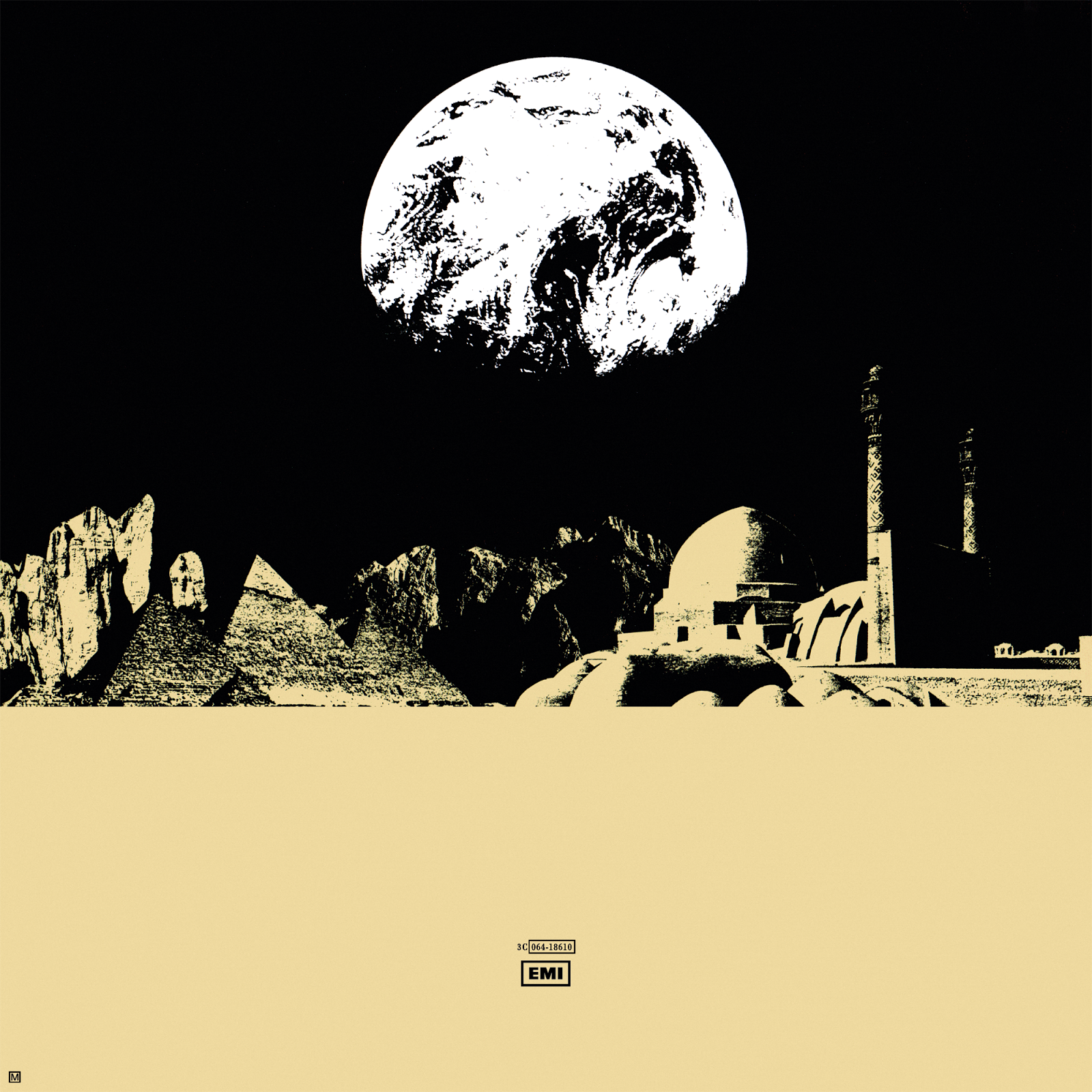
"Legione straniera", original innersleeve
In the late '70s
Pio was hired by
Franco Battiato as violin teacher and they soon became friends. Later on, almost for amusement and curiosity,
Pio began to play improvised concerts with him and vocalist
Juri Camisasca.
In 1978 he worked as musician on "
Juke Box" by
Battiato and during the same year he released his first album of experimental music entitled "
Motore immobile" (...you can listen to the minimal title track
here...) on
Cramps Records.
The long collaboration with
Battiato was one of the most prolific and interesting during the '80s and '90s in Italy; this partnership took
Pio to new heights in the fields of commercial and avantgarde music, with a great success in terms of popularity and discography.
Most of the albums by
Franco Battiato, from "
L'era del cinghiale bianco" (1979) to "
Unprotected" (1994), depending on the case, included
Giusto Pio as co-author of the music or of the arrangements, as violinist or as conductor. All the tours performed by
Battiato during those years always included
Giusto Pio among the essential lineup of musicians.

"Legione straniera", original innersleeve
In those years, always with
Battiato, he wrote the music and arrangements of many hit songs for Italian singers
Alice,
Giuni Russo and
Sibilla ("
Per Elisa" by
Alice won the
Sanremo Festival in 1981, you can watch the original performance
here), produced two albums for
Milva and various songs for other artists.
In 1984
Pio,
Battiato and lyricist
Rosario "Saro" Cosentino penned the
Eurovision Song Contest entry "
I treni di Tozeur", performed by
Alice and
Battiato, which finished 5th in the contest and became a considerable commercial success in
Continental Europe and
Scandinavia. A video of the original performance, which briefly shows
Giusto Pio as orchestra conductor, is available
here.

Front cover of the "Legione straniera / Giardino segreto" 7" single
Between 1982 and 1987 he released three album of
Pop music ("
Legione straniera", the subject of this post, "
Restoration" and "
Note"). In particular, "
Legione straniera" and "
Restoration", both written along with
Battiato, sold very well and
Pio became a well-known name among the younger audiences, as evidenced by the musical chronicles of those years on many magazines and newspapers.
In 1988 he published "
Alla corte di Nefertiti", an album that marked the passage to a music style which was very different from his previous output and had far less commercial appeal. His association with
Pop music definively waned after the end of his artistic fellowship with
Battiato.

Back cover of the "Legione straniera / Giardino segreto" 7" single
Over the past decade,
Pio increasingly approached acoustic and electronic research, and produced music for theater (for example the play "
Medea", for the Florentine group
Krypton, which won first prize for music at the
Massa Carrara Festival, or his collaboration on
Battiato's operas performed in the major Italian theaters), music for movies and interactive musical comments with other art forms such as painting, sculpture and poetry.
Among his most recent music releases we remember "
Utopie" (1990), "
Missa Populi" (dedicated to His Holiness
John Paul II, 1995), and "
Le vie dell'oro" (2000).
The book "
Dedicato a Giusto Pio", which includes a companion CD entitled "
Dolomiti Suite", was published in 2010 to celebrate
Pio's 85th birthday.

Franco Battiato and Giusto Pio in the early '80s
"
Legione straniera" contains the following tracks:
01.
Legione straniera (3:14)
02.
Ostinato (3:11)
03.
Eritrea's (3:24)
04.
Cristina's Day (2:37)
05.
Celestial Tibet (3:12)
06.
Giardino segreto (3:42)
07.
Totem (4:53)
08.
Aria di un tempo (3:30)
All tracks were remastered from the original vinyl in December 2013 and are available in
FLAC lossless format or
high-quality 320 Kbps MP3 files, both formats include restored and printable PDF artwork.
As usual, please have a look at the comments for the download links.

Following the huge success of
Franco Battiato's "
La voce del padrone", co-arranged by
Giusto Pio, the first Italian album with a certified sale of more than 1.000.000 copies, "
Legione straniera" was released by
EMI Italiana with catalogue number
3C 064-18589 in late 1982. It sold more than 70.000 copies, but despite this little success
at the time of writing it has never been officially reissued on CD.
The whole album, produced by
Angelo Carrara, was co-written hand-in-hand by
Pio and
Battiato. Music, arrangements and stylistic features clearly show the influence of the LPs released by
Battiato in 1980-82; beside this, he is also present as singer in the few tracks that are not purely instrumental.
Pio's compositional style relies mostly on his violin, and embodies an ideal trait-d'union between
Baroque music and
Post-modern Minimalism. Elegance, repetition, and regularity are the key aspects of most of the
tracks, where schematic violin themes fluctuate over straight beats.
As a matter of fact, the album also benefits of the same team of musicians who worked on "
La voce del padrone", including
Paolo Donnarumma on bass, famous guitarist
Alberto Radius and keyboardist
Filippo Destrieri.
Destrieri is credited as co-author on "
Legione straniera" (
Foreign Legion), the title track which opens
Side A of the album; it is reported that he created the original four-bar theme of the piece, which was then elaborated and arranged by
Battiato and
Pio. This short epic number offers sonic landscapes that evoke a sort of "
Beau Geste" or "
Lawrence of Arabia" in technicolor; it was also released as a 7" single a few months before the album, probably sometimes during summer 1982.
"
Ostinato", as its title implies, is based on a phrase that is persistently repeated, first on keyboards and violin, and then on electric guitar in the closing section; a polite and gentle musical motif that evocates an outworld placidity. This track was also made popular at a later date by its inclusion as the theme song of "
Sereno variabile", an Italian TV program
The album collects many
extra-European suggestions but never actually sounds like world music; the violin and guitars on "
Eritrea's" are a fine example of this moderate practice.
Side A ends with the short "
Cristina's Day", which sounds like a delightful fairy tale for children where
Pio's violin is enriched by
Paola Orlandi's choir and unexpected fast sequencer lines/arpeggios.
 Side B
 starts with "
Celestial Tibet", another very enjoyable track that preeminently features
Battiato's voice during the refrain and might have been easily included in one of his own albums without sounding out of place. I can't help mentioning the bass line played by
Paolo Donnarumma on this piece: it is one of the details that I like most in the entire album.
Pio and
Battiato also allows some room for a pure
divertissement like "
Giardino segreto" (
Secret Garden), a reworking of
Johann Sebastian Bach's famous "
Air On the G String" as transcripted by
Fritz Kreisler complete with a fake
Thai choir which, according to
Pio, was nothing else than «
...the recording of maids chattering nearby Battiato's hotel room, spinned backwards with a curious and alienating effect.» Strangely enough, this is the only track on the album which is signed by
Battiato with one of his pseudonyms:
Kui.
Almost reaching the five minutes marks, "
Totem" is the longest track on the album and also the one with the darkest passages, and the gloomiest and most mysterious atmospheres. Definitely a favourite of mine!
The album closes with the rarefied and somehow sad melody of "
Aria di un tempo" (...which I guess can be translated with "
Atmosphere of a Past Time"...), a piece where, despite its electronic architecture, the prevailing air is a noble
fin de siècle mood.
In the end, according to
Giusto Pio's own words, "
Legione straniera" is «
a computerized album, but made judiciously, Oriental and esoteric, but with moderation.»
Here's the complete credits and personnel list of "
Legione straniera":
Arrangements:
Franco Battiato and
Giusto Pio
Music and lyrics:
Franco Battiato and
Giusto Pio except "
Legione straniera" by
Giusto Pio,
Franco Battiato and
Filippo Destrieri, and "
Giardino segreto" by
Giusto Pio,
Kui (
Franco Battiato) and
Johann Sebastian Bach
Production:
Angelo Carrara
Art Director:
Francesco Messina
Violins:
Giusto Pio
Percussions:
Alfredo Golino
Bass:
Paolo Donnarumma
Keyboards:
Filippo Destrieri
Microcomposer:
Luigi Tonet
Guitars:
Alberto Radius
Choir:
Paola Orlandi
Choir on "
Giardino segreto":
Coro dei Tailandesi

Giusto Pio as he appears on the back cover of "Legione straniera"
The following clips offer a preview of the remastered album; for this purpose I chose my favourite tracks: "
Legione straniera", "
Totem" and "
Giardino segreto", enjoy!
...and here's the original videoclip for "
Legione straniera", along with a live version of the same track performed by
Giusto Pio and
Filippo Destrieri somewhere in Spain in 1987, what a find!
More information about "
Legione straniera",
Giusto Pio and
Franco Battiato is available here:
http://digilander.libero.it/giustopio
http://it.wikipedia.org/wiki/Giusto_Pio
http://www.discogs.com/artist/369428-Giusto-Pio
http://digilander.libero.it/giustopio/intervista.htm
http://www.musicletter.it/indienews/?x=entry:entry111208-130248
http://dentroisecondi.blogspot.it/2013/07/giusto-pio-se-ne-consiglia-la-lettura.html
http://www.fenice.info/start.asp?p=/battiato/intervis.asp
http://www.arte.go.it/video/video_art/Pio.htm
http://aliceedintorni.blogspot.it/2010/12/dedicato-giusto-pio-11-gennaio-2011.html
http://www.debaser.it/recensionidb/ID_12994/Giusto_Pio_Legione_straniera.htm
http://ilgolpeeluva.blogspot.it/2010/09/giusto-pio-legione-straniera-emi-1982.html
http://www.youtube.com/watch?v=0CLIScLzs-c
http://www.youtube.com/watch?v=XYy-XSrcmxc
http://en.wikipedia.org/wiki/Franco_Battiato
http://www.youtube.com/watch?v=oFjXwOB26MU
http://www.youtube.com/watch?v=GjvL7E0J8bQ
http://www.youtube.com/watch?v=U07EtWdyk3Q
If you have any other useful information about
Giusto Pio and "
Legione straniera" - especially corrections and improvements to this post - or if you spot any dead links, please get in touch with me at
stereocandies [at] hotmail [dot] com or leave a comment in the box below, thank you!